Understanding the Thermal Barrier: Why Your Living Room is Overheating
As a master glazier with over two and a half decades in the field, I have seen it all from failing IGUs (Insulated Glass Units) to warped vinyl sashes that refuse to close. Most homeowners think that a window is just a piece of glass, but it is actually a complex thermal valve. When your living room feels like a greenhouse in July, you are likely dealing with a high Solar Heat Gain Coefficient (SHGC) issue. A homeowner once called me in a panic because their new windows were ‘sweating’ and the room was still stifling. I walked in with my hygrometer and showed them that the relative humidity was sitting at 60 percent while the radiant heat from the sun was spiking the surface temperature of their interior drywall to 105 degrees. It was not a failure of the glass; it was an failure of their environmental management. They were expecting the glass to do all the work while ignoring how roller shades and proper ventilation play into the physics of the building envelope.
“Installation is just as critical as the window performance itself. A high-performance window installed poorly will fail.” AAMA Installation Masters Guide
The Physics of Solar Heat Gain and Surface #2
To understand why your living room is hot, we have to talk about short-wave versus long-wave radiation. The sun sends short-wave infrared radiation through your glass. Once that light hits your floor or furniture, it converts into long-wave radiation (heat). Standard glass allows short-wave in but traps long-wave inside, creating the greenhouse effect. In a hot climate, you want your Low-E coating on Surface #2 (the inner face of the outboard lite) to reflect that heat before it ever enters the building. If you are considering impact window replacement or full frame window services, you must specify the coating location based on your geographic orientation. This is where roller shade hacks become vital for the 2026 home, acting as a secondary barrier that intercepts residual heat that the glazing bead and glass could not fully reject.
Hack 1: The Zero-Gap Inside Mount Strategy
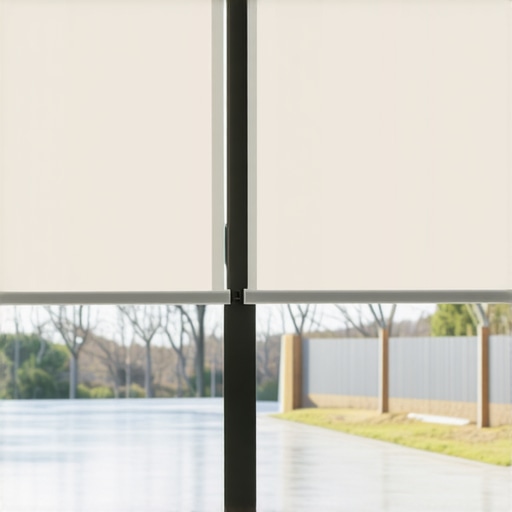
Precision is everything in glazing. When installing roller shades, the most common mistake is leaving a massive light gap at the edges. For maximum cooling, you need an inside mount that sits as close to the glazing bead as possible without interfering with the operable components of the sash. This creates a stagnant air pocket between the shade and the glass. This air acts as an additional layer of insulation. If you have bi-fold window services or large sliding window services, ensuring the shade track does not foul the rough opening or the track mechanism is critical. Use a shim if necessary to level the mounting bracket so the fabric tracks perfectly straight, preventing edge fraying and ensuring a tight thermal seal.
Hack 2: Maintaining the Weep Hole and Track System
You cannot talk about cooling without talking about the integrity of the window itself. If your window track cleaning is neglected, the weep hole system can become clogged. This prevents the window from breathing and can lead to moisture buildup that degrades the thermal performance of the frame. A dirty track also prevents the window from closing tightly against the weatherstripping, allowing hot air infiltration. Before you even think about roman shade services or roller installs, ensure your sliding window services provider has checked the rollers and tracks. A window that does not close fully is a thermal leak that no shade can fix.
Hack 3: The Reflective Backing and NFRC Ratings
When selecting your shade material, look at the solar reflectance value. Just as we look at NFRC labels for a window’s U-factor and SHGC, we must look at the technical specs of the shade fabric. A dark-colored shade might look great, but it absorbs heat and radiates it into the room. For a cooler 2026 living room, choose a shade with a highly reflective white or silver backing. This reflects the solar energy back through the glass before it can heat up your interior air. This is particularly important if you have roof window replacement units or skylights, where the angle of incidence for the sun is more direct and intense.
“The fenestration system’s ability to control heat flow is the cornerstone of residential energy efficiency.” NFRC Performance Standards
Hack 4: Managing Safety and Structural Integrity
Modern homes often require window safety glass (tempered or laminated) in specific locations. When you are drilling into your window casing to install shades, you must be hyper-aware of where the glass stops and the rough opening begins. I have seen countless installers shatter a tempered pane because they used a screw that was too long and hit the edge of the glass inside the glazing bead. If you are upgrading your home with child proof window locks or grille insert replacement, ensure that your shade hardware does not interfere with these safety features. This is especially true for impact window replacement, where the frames are often thicker and more robust to handle wind loads.
Hack 5: Integrating Thermal Logic with Automation
The final hack for 2026 is automation based on solar tracking. By syncing your roller shades to close when the sun hits a specific azimuth, you prevent the ‘heat soak’ effect. Once your furniture and floors get hot, your AC has to work three times harder to cool the room down. If you have full frame window services scheduled, consider pre-wiring for motorized shades. This allows for a much cleaner installation than battery packs. Whether you are using roman shade services for aesthetics or heavy-duty rollers for heat rejection, timing is the difference between a comfortable home and an expensive utility bill.
Final Thoughts from the Glazing Bench
Do not be fooled by high-pressure sales tactics promising that triple-pane glass is the only solution. While triple-pane has its place in the North, in hotter climates, the combination of a high-quality double-pane unit with a low SHGC and a properly installed roller shade is far more effective. Always verify the U-factor on the NFRC label and ensure your installer uses flashing tape and a proper sill pan during any full frame window services. A window system is only as good as its weakest link, whether that is a clogged weep hole, a missing muntin, or a poorly mounted shade. Take the time to measure your rough opening accurately and never settle for a ‘caulk-and-walk’ installation. Your comfort in 2026 depends on the science of glazing you apply today.