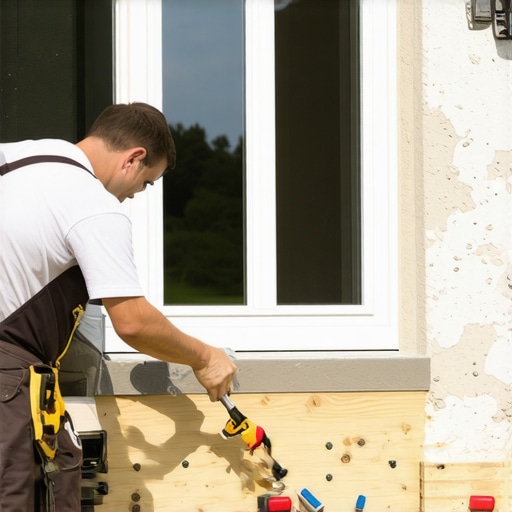
The first thing I notice when I step into a house plagued by window failure isn’t the draft; it’s the faint, earthy scent of decomposing cellulose. Most homeowners ignore it until the drywall starts to blister or the sash won’t slide anymore. As a glazier with over two decades in the trenches, I have seen every shortcut in the book, and almost all of them lead to one place: rot. If you are noticing soft spots in your wood, you are likely already a year late to the repair. By 2026, many homes built during the mid-2000s construction boom will hit a critical failure point due to aging sealants and improper flashing. Stopping this decay requires more than a bucket of wood filler; it requires an understanding of how water interacts with a rough opening.
The Installation Autopsy: A Tale of Hidden Decay
I pulled a wood double-hung window out of a classic colonial home in the suburbs last autumn and the header was completely black with rot. Why? The previous installer relied on the nailing fin instead of proper flashing tape. They thought the trim was waterproof. I had to show the homeowner how water had been migrating behind the brick mold for five years, slowly eating the structural framing. This is the reality of many installations: if you don’t manage the water, the water will manage your house. This failure is particularly common in structures where aluminum window framing was used without a proper thermal break, leading to massive condensation runoff that pools on the interior wood sills.
“Installation is just as critical as the window performance itself. A high-performance window installed poorly will fail.” AAMA Installation Masters Guide
Step 1: The Full-Frame Tear-Out and Sill Pan Integration
When you encounter rot, the ‘pocket replacement’ or ‘insert’ method is usually a band-aid on a gunshot wound. You must get back to the rough opening. This means removing the interior trim and potentially the exterior siding to see the true extent of the damage. Once the old unit is out and the rotted wood is replaced with kiln-dried lumber, you must install a sill pan. A sill pan is a three-sided flashing element that sits at the bottom of the opening. It is sloped toward the exterior. If water ever gets past the glazing bead or the sash seals, the sill pan catches it and directs it back outside through weep hole channels. Without this, you are just waiting for the next rot cycle to begin. During this phase, we often use drone window inspection to check the surrounding roofline or upper-story windows, ensuring that the water isn’t actually coming from a leak three floors up and just settling at your sill.
Step 2: Managing the Shingle Principle with Flashing Tape
The ‘Shingle Principle’ is simple: the upper layer must always overlap the lower layer. When we apply flashing tape, we start at the bottom and work our way up. This ensures that any moisture running down the house wrap is always directed over the top of the next barrier, never behind it. This is where thermal imaging window leaks become a vital diagnostic tool. In my experience, even a tiny pinhole in the flashing can allow enough moisture to sustain a fungal colony in a dark, warm wall cavity. We pay close attention to the corners. This is also the ideal time to consider emergency egress windows if you are working in a basement or bedroom. Code requirements for egress are non-negotiable, and failing to update the opening size during a sill replacement is a missed opportunity for safety and compliance. We ensure the operable part of the window meets the clear opening height and width mandated by local fire codes.
“Effective flashing systems must be integrated with the water-resistive barrier to ensure a continuous drainage plane.” ASTM E2112 Standard Practice
Step 3: Hardware Precision and Seal Integrity
Once the frame is level, square, and plumb—checked by shim placement at every 12 inches—the final step is ensuring the unit closes with airtight precision. This is where multi-point lock installation becomes superior to single-latch systems. A multi-point lock pulls the sash into the frame at three or more points, compressing the weatherstripping evenly. This prevents the air infiltration that leads to dew point shifts on the interior glass. If you are dealing with high-traffic areas, we might also discuss soundproof window installation techniques, which involve using laminated glass with a specific acoustic interlayer. This glass is much heavier, requiring beefier hardware and more robust aluminum window framing to handle the load. We finish by checking the glazing bead to ensure it is seated perfectly, as a loose bead is the primary entry point for water in geometric window shapes where the angles make traditional drainage difficult. Don’t forget the final touches like window screen replacement with high-transparency mesh and professional window blind installation that doesn’t penetrate the newly sealed frame.
The Long-Term View: Maintenance and Guarantees
While many companies offer lifetime window guarantees, read the fine print. They often cover the glass seal but not the labor or the damage caused by improper flashing. True protection comes from the installation science. In northern climates, where the enemy is heat loss and interior condensation, we focus on the U-Factor. A warm-edge spacer is essential here to keep the perimeter of the glass from becoming a cold bridge that invites rot-inducing moisture. By following these technical steps, you aren’t just fixing a window; you are engineering a permanent solution to moisture intrusion that will keep your home’s structure sound well beyond 2026.