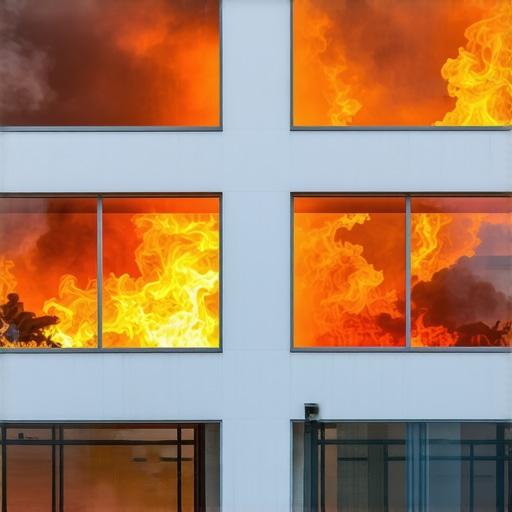
The Reality of Fire-Rated Fenestration: Beyond the Glass
In the glazing trade, we often say that a window is a hole in the wall that wants to fail. When you add a 90-minute fire rating requirement into the mix, that failure is not just about a drafty room or a high utility bill; it is about life safety and structural integrity. As we approach 2026, the standards for fire-rated assemblies are tightening. A 90-minute fire window is a complex machine designed to withstand extreme thermal shock while preventing the passage of flame and, crucially, radiant heat. Most installers treat these like a standard double pane window install, but that is a recipe for disaster. A fire-rated window is an assembly, not just a piece of glass. If the frame, the glazing bead, and the rough opening are not perfectly synchronized, the rating is voided before the first fire inspection.
The Condensation Crisis: Why Environmental Control Matters
A homeowner called me in a panic because their new windows were ‘sweating.’ I walked in with my hygrometer and showed them the humidity was 60 percent. It was not the windows; it was their lifestyle. But here is the professional secret: in specialized 90-minute fire windows, moisture is more than an aesthetic nuisance. Many high-performance fire-rated units use an intumescent interlayer. This is a clear, gel-like substance sandwiched between layers of tempered glass. If the perimeter seals fail because of poor installation or excessive interior moisture, that interlayer can begin to cloud or delaminate. I have seen thousand-dollar fire sashes ruined because the installer neglected the weep hole logic or failed to use a proper sill pan to manage moisture. You cannot just ‘caulk-and-walk’ a fire assembly. You are managing the dew point and the fire barrier simultaneously.
“Installation is just as critical as the window performance itself. A high-performance window installed poorly will fail.” AAMA Installation Masters Guide
Spec 1: Fire-Resistive vs. Fire-Protective Ceramic Technology
By 2026, the distinction between fire-protective and fire-resistive glass will be the primary focus of safety inspections. Fire-protective glass, like basic wired glass or some ceramic products, blocks flames and smoke but allows radiant heat to pass through. In a 90-minute scenario, the heat on the non-fire side can rise so quickly that it spontaneously combusts furniture or curtains. This is why the 2026 specs emphasize fire-resistive glass. This technology uses multiple layers of glass with intumescent interlayers that turn opaque during a fire, creating a thermal shield. When analyzing the physics, we look at the heat flux. A true 90-minute fire-resistive window must keep the temperature rise on the protected side below 250 degrees Fahrenheit above ambient. This involves complex glazing bead engineering to ensure the glass stays seated even as the frame expands under 1600-degree heat.
Spec 2: Structural Integrity and Rough Opening Tolerances
You can buy the most expensive folding window systems or oriel window repair kits, but if the rough opening is not square, level, and plumb within a sixteenth of an inch, a 90-minute fire window will not perform. These units are heavy, often weighing three times more than a standard residential sash. We use heavy-duty steel shims, not wood, to support the load. If you use wood shims, they will burn away in the first five minutes, causing the window to shift and the fire seal to break. The 2026 safety specs require that the flashing tape and the surrounding fire-stop foam are compatible with the frame material to prevent off-gassing during a thermal event. I have pulled out frames where the installer used standard combustible spray foam around a fire window. That is not just lazy; it is dangerous. The shingle principle must be applied to the sill pan to ensure that any moisture that enters the system is directed out through the weep holes without compromising the fire-caulk barrier.
“The fire resistance rating of a window assembly is dependent upon the compatible integration of the glass, frame, and hardware.” NFPA 80 Standard for Fire Doors and Other Opening Protectives
Spec 3: Integrated Smoke Vent Window Systems and Actuation
The third crucial spec for 2026 involves the integration of smoke vent window systems. In high-density buildings, the window is no longer a passive observer. It is part of the life safety system. These windows must be operable via a thermal release or a signal from the fire alarm system. This adds a layer of mechanical complexity. The window track cleaning becomes a safety mandate rather than a spring-cleaning chore. If the track is filled with grit or debris, the smoke vent may fail to actuate. For 90-minute windows, the hardware must be made of stainless steel or specialized alloys that will not melt or fuse at high temperatures. We are also seeing a rise in window insulation upgrades that include window tinting services specifically designed for fire glass to improve energy efficiency without affecting the fire rating. However, you cannot just slap any aftermarket film on fire glass; it must be a factory-applied or approved coating that won’t ignite.
Maintenance and Lifetime Window Guarantees
When a company offers lifetime window guarantees, you need to read the fine print regarding fire-rated assemblies. These units require periodic inspections. Are the gaskets still supple? Is the glazing bead seated? Is there any sign of moisture in the intumescent layers? For 90-minute windows, we recommend a professional window screen replacement and track cleaning service at least once a year to ensure that the operable components and smoke vents are ready for action. While we emphasize energy-efficient solutions for the modern home, in the world of fire safety, the logic of the U-factor and Solar Heat Gain Coefficient must sit side-by-side with the ASTM E119 test standards. We are not just installing a window; we are installing a 90-minute insurance policy against catastrophe. Proper window insulation upgrades in fire-rated zones must always prioritize the integrity of the fire seal over simple R-value gains.