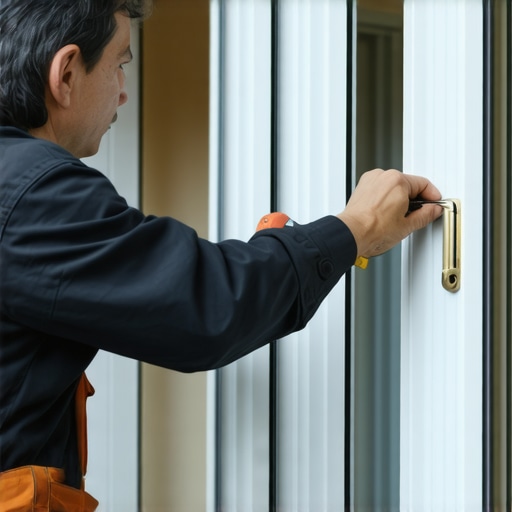
The Engineering Behind the Handle: Why a Broken Latch is a Building Envelope Failure
I recently walked into a residence where the homeowner was in an absolute panic because their relatively new double-hung units were sweating along the bottom rail. They were convinced the IGU (Insulated Glass Unit) had a seal failure. I didn’t reach for a glass suction cup; I reached for my hygrometer. I showed them the relative humidity was sitting at a staggering 60 percent. But the real culprit wasn’t just the lifestyle; it was a broken cam latch on the meeting rail. Because that latch was snapped, the sash wasn’t being pulled tight against the weatherstripping. In a cold climate like Chicago or Minneapolis, that tiny gap allows cold air to infiltrate, dropping the surface temperature of the glass below the dew point. That is not a glass problem; it is a mechanical failure of the window handle replacement system.
“Installation is just as critical as the window performance itself. A high-performance window installed poorly will fail.” AAMA Installation Masters Guide
Hack 1: The Multi-Point Lock Installation Pivot
When dealing with modern casement or awning windows, the single-point latch is becoming a relic of the past. For 2026, the gold standard is the multi-point lock installation. If your current handle is spinning or failing to engage, you are likely dealing with a misalignment in the tie-bar. The technical fix involves checking the sash squareness within the Rough Opening. Often, a house settles, and the window frame follows. If the frame is racked, the locking rollers won’t line up with the keepers. Before you strip the gears in the operator, you need to Shim the frame back to level and plumb. A Multi-point lock installation ensures that the sash is pulled tight at three or more points, which is crucial for maintaining the U-Factor rating. If the sash is not compressed, you are essentially living with a hole in your thermal envelope.
Hack 2: ADA Compliant Windows and Universal Lever Upgrades
By 2026, universal design is no longer optional for high-end renovations. If you are performing a window handle replacement, look toward ADA compliant windows hardware. Standard crank handles require a twisting motion and a grip strength that many find difficult as they age. Replacing these with high-torque lever handles allows for operation with less than five pounds of force. During this process, you may find that the window jamb extension interferes with the new lever’s throw. You must ensure the Glazing Bead is not disturbed during the hardware swap, as this holds the tempered glass installation in place. Lever-style handles provide better leverage, ensuring that even a heavy, triple-paned sash can be fully seated into the Sill Pan to prevent water ingress.
“Standard Practice for Installation of Exterior Windows, Doors and Skylights requires that all hardware be tested for functional operation and structural integrity after the unit is secured.” ASTM E2112
Hack 3: The Hybrid Restoration for Leaded Glass
For those living in historic homes, a broken latch on a leaded glass restoration project is a delicate matter. You cannot simply screw a modern vinyl latch into a 100-year-old wood Sash. The hack here is the use of offset surface-mount bolts that distribute the tension across the Muntin bars rather than putting stress on the solder joints of the leaded glass. If the wood is soft, you must consolidate it with structural epoxy before the window installation services team attempts to mount new hardware. This preserves the aesthetic while significantly improving the air-tightness of the unit. Additionally, check your Weep Hole status. If you are replacing hardware because of corrosion, it is a sign that water is not exiting the frame correctly, likely due to a blocked drainage path or a missing Drip Cap.
The Thermal Logic of Hardware Performance
In northern climates, the goal of a handle is compression. We need a low U-Factor to prevent heat from escaping. If the handle doesn’t pull the sash into the bulb seal, your argon gas fill is useless because the air is just bypassing the glass entirely. In the south, where the Solar Heat Gain Coefficient (SHGC) is the priority, a broken latch allows hot, humid air to enter, taxing the HVAC system. Whether you are dealing with self-cleaning window glass or a standard window screen repair, the hardware is the handshake between the user and the building’s performance. Never settle for a caulk-and-walk fix when the Operable parts of your home’s skin are failing. Real window performance is measured in decades, not days, and that starts with a handle that actually works.