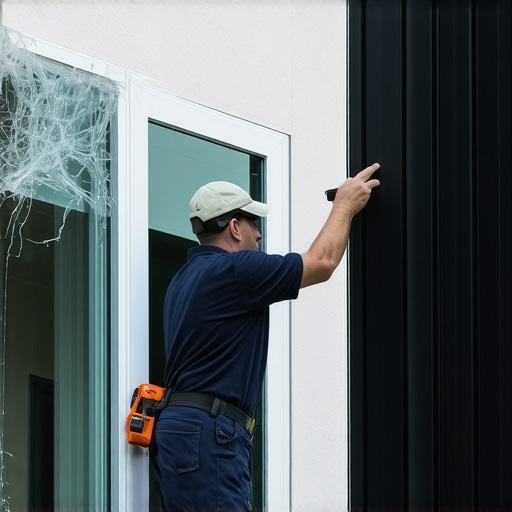
The Pultruded Paradox: Why Your ‘Lifetime’ Windows Are Failing
In my 25 years as a master glazier, I have seen every frame material come and go. I have watched the industry transition from drafty single-pane wood sashes to the high-tech pultruded fiberglass units we see today. Fiberglass is, by almost every metric, the superior substrate. It has a nearly identical coefficient of thermal expansion to the glass itself, meaning the frame and the glass move together during the brutal freeze-thaw cycles of a northern winter. Yet, by 2026, we are seeing a spike in failures not because the material is weak, but because the installation complexity has reached a tipping point. I recently walked into a high-end residence where the homeowner was convinced their high-performance fiberglass window services were a scam. I pulled out my thermal imaging camera and found the culprit: a total lack of a Sill Pan and improper Flashing Tape application. The window was fine; the hole in the wall was a disaster. I spent the afternoon showing them how the Rough Opening had been neglected, leading to a localized rot that was migrating into the structural headers. This is the reality of modern fenestration; a high-performance window is only as good as its water management system.
“Installation is just as critical as the window performance itself. A high-performance window installed poorly will fail.” – AAMA Installation Masters Guide
Sign 1: Infrared Ghosting and Argon Dissipation
The first sign you cannot ignore in 2026 is what I call ‘Infrared Ghosting.’ If you are noticing a distinct chill near your casement window installation despite the Sash being locked tight, the issue is likely not the frame, but the Glazing Bead or the seal itself. Thermal imaging window leaks are becoming the standard diagnostic tool for a reason. In fiberglass units, the frame is so thermally efficient that the weak point becomes the Insulated Glass Unit (IGU). When the Argon or Xenon gas fill dissipates—a process known as outgassing—the U-Factor of your window skyrockets. You might see a faint fogging in the corners, but often, the only sign is a cold spot on the glass surface. In our northern climates, where the delta between the indoor 70°F and the outdoor -10°F is massive, this thermal bridging causes the Dew Point to shift to the interior surface of the glass, leading to persistent condensation. If your thermal imaging shows a dark blue plume around the edge of the glass, your seal has failed, and no amount of caulking will fix a compromised IGU. This is where professional fiberglass window services must intervene to replace the glass package while preserving the pultruded frame.
Sign 2: The Mitered Stress Fracture and Corner Separation
Fiberglass is incredibly rigid, which is why it is the preferred choice for geometric window shapes and oversized garden window install projects. However, that rigidity is a double-edged sword. Unlike vinyl, which can flex and bow, fiberglass is brittle. By 2026, we are seeing 20-year-old fiberglass units where the epoxy-bonded miter joints are beginning to hairline. This often happens because the Rough Opening tolerances were too tight, leaving no room for the house’s natural settling. When the house shifts, the fiberglass frame refuses to bend and instead cracks at the joint. Watch for daylight peeking through the corners or a Sash that no longer sits square in the frame. If you notice your window lock installation is suddenly difficult to engage, it is not the lock—it is the frame racking. In coastal areas, this is even more critical. While fiberglass doesn’t corrode like aluminum window framing, a cracked corner in an impact window replacement scenario compromises the entire pressure rating of the unit. A breach in the corner allows positive wind pressure to enter the wall cavity, which is the primary cause of roof-off structural failure during high-wind events.
“The installation process must account for the management of incidental moisture through a defined drainage path, ensuring that any water entering the system is directed back to the exterior.” – ASTM E2112 Standard Practice
Sign 3: Hardware Fatigue in the Age of Automation
As we move into 2026, window automation integration has become the norm for hard-to-reach units like dome skylight replacement projects or high-clerestory casements. The third sign of impending failure is mechanical resistance in the motorized drive. Fiberglass windows are heavy, and the high-torque motors used in automation can strip the internal gears if the Sash is not perfectly balanced on its Shims. If you hear a grinding noise or the window fails to achieve a full compression seal, the hardware is fatiguing. This is often caused by a blocked Weep Hole. When water backs up in the sill because of debris, it sits against the stainless steel hardware. Even ‘corrosion-resistant’ metals will eventually succumb to galvanic reactions when trapped in a stagnant pool of water inside the frame. I always tell my clients: a window is a machine. It requires lubrication and clear drainage. If your automated locks are struggling, you are months away from a total mechanical failure that could leave your home vulnerable to both the elements and intruders.
The Glazier’s Verdict: Repair vs. Replacement
When you encounter these signs, the ‘caulk-and-walk’ contractors will tell you to replace the whole unit. But as a specialist, I know that fiberglass’s strength allows for surgical repairs. We can reglaze a failed IGU, we can re-square a racked frame by adjusting the Shim placement, and we can clear Sill Pans that have been clogged by years of neglect. However, if the pultrusion itself is delaminating—rare, but possible with cheap imports—then impact window replacement is your only path. The key is to catch these issues early. Use the ‘Paper Test’: close your window on a piece of paper. If you can pull it out with no resistance, your compression seal is gone. Don’t wait for the rot to turn your Rough Opening into compost. Address the thermal bridges, clear your Weep Holes, and ensure your window automation integration is calibrated to the weight of the glass. In the world of high-performance glazing, precision is the only thing standing between a comfortable home and a costly renovation. [IMAGE_PLACEHOLDER] { “@context”: “https://schema.org”, “@type”: “HowTo”, “name”: “How to Inspect Fiberglass Windows for Thermal Failure”, “step”: [ { “@type”: “HowToStep”, “text”: “Use a thermal imaging camera during a cold day to scan the perimeter of the glass for blue zones indicating Argon loss.”, “name”: “Thermal Scan” }, { “@type”: “HowToStep”, “text”: “Inspect the exterior miter joints for hairline cracks in the resin or epoxy bond.”, “name”: “Joint Inspection” }, { “@type”: “HowToStep”, “text”: “Test the operation of all mechanical hardware and automated systems for resistance or grinding noises.”, “name”: “Mechanical Check” } ] }