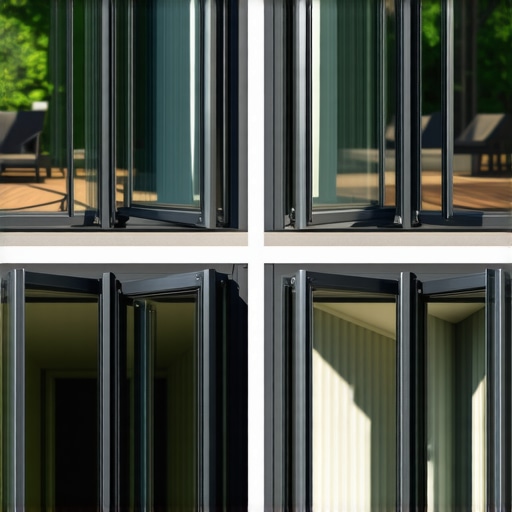
The Structural Autopsy of a Failing Bi-Fold System
A homeowner called me in a panic last November because their new high-performance bi-fold doors were ‘sweating’ and refusing to slide across the track. I walked in with my hygrometer and thermal camera, and within minutes, I showed them the interior humidity was spiked at 60% while the outside temperature had plummeted to 15 degrees. It wasn’t the glass failing; it was the lifestyle moisture hitting the dew point on the bottom rail. This is the reality of modern glazing: when you have a 15-foot opening in your wall, you aren’t just installing a door; you are managing a massive thermal bridge that requires surgical precision during installation. If those doors are sticking, it’s rarely a ‘bad’ product—it’s usually a failure of the rough opening to remain stable under load or a drainage system that has been compromised by improper flashing tape application.
“Installation is just as critical as the window performance itself. A high-performance window installed poorly will fail.” – AAMA Installation Masters Guide
Why Your Patio Doors Are Binding: The Header Headache
When we talk about bifold window services, the first thing I look at is the header. A 12-foot or 16-foot span requires a massive LVL or steel beam. If that header deflects even 1/8th of an inch, your 2026-spec patio doors—which are engineered to tight tolerances—will bind. This isn’t just a matter of a sticky track; it’s a structural pinch. In many cases, I’ve had to perform a window header repair because the original contractor didn’t account for the ‘live load’ of the floor above. When that beam sags, it puts pressure on the top track, crushing the rollers and making the operable panels nearly impossible to move. A master glazier knows that you must leave a significant expansion gap at the head, filled with open-cell foam rather than rigid products, to allow the building to breathe without sacrificing the window’s movement.
The Drainage Blueprint: Sill Pans and the Shingle Principle
Water management is where ‘caulk-and-walk’ installers fail. The shingle principle dictates that every layer of the building envelope must shed water to the layer below it. For bi-fold systems, the sill pan is the most critical component. If your installer skipped the sub-sill flashing or blocked the weep hole, water will back up into the track. This leads to wood rot window repair scenarios that could have been avoided with a $50 piece of stainless steel. In northern climates, this standing water freezes, expanding and warping the track, which is why your doors feel sticky in the morning but move better by noon. We use a dedicated sill pan with an integrated back dam to ensure that any water penetrating the primary seal is directed back to the exterior through the drainage channels.
Fix #1: Precision Window Track Cleaning and Roller Calibration
Most homeowners assume a sticky door needs more lubricant. Wrong. Adding WD-40 to a dirty track creates a grinding paste that destroys stainless steel bearings. The first pro fix is a deep-clean of the track using a HEPA vacuum and a stiff nylon brush to remove microscopic silt. Once clean, we look at the roller adjustment. Modern bi-fold doors feature adjustable carriages. By turning the adjustment screw, we can lift or lower the sash to re-square it within the frame. If the door is dragging on the sill, we shim the rollers up. If it’s binding at the top, we drop them. This is basic window replacement services 101, but it’s often overlooked by those who don’t understand the physics of a hanging load.
Fix #2: Correcting the Plumb—Shim Physics and Jamb Extensions
If the frame isn’t perfectly plumb, the panels will naturally want to ‘swing’ to one side, putting lateral pressure on the hinges. This is where a window jamb extension and proper shimming come into play. We use high-density plastic shims behind every hinge point to ensure the frame doesn’t bow when the fasteners are tightened. A common mistake in arched window installation or large bifold setups is over-driving the screws, which pulls the jamb out of alignment. We use a 6-foot level and a laser to ensure the vertical planes are dead-on. If the jamb has bowed, we have to back out the fasteners, re-shim, and sometimes use a window sash repair technique to restore the structural integrity of the frame member itself.
Fix #3: Header Reinforcement and Sag Management
If the header has already deflected, we often have to look at ‘through-frame’ anchoring. We replace standard 2-inch screws with 4-inch structural lags that bite deep into the header, pulling the track back into its intended position. In extreme cases, this requires opening the drywall for a full window header repair. In northern climates, we also have to consider the U-factor. A sagging header can create a gap where cold air rushes in, causing the sash to contract and the hardware to bind. By reinforcing the header and ensuring the Low-E coating on Surface #3 is reflecting heat back into the room, we keep the frame warm and the tolerances stable.
Fix #4: Gasket and Weather-Stripping Alignment
The compression seals on a bi-fold door are what make it energy efficient, but if they are out of alignment, they act like a brake. We check the glazing bead and the bulb seals for signs of ‘pinching.’ Often, the gasket has pulled out of its kerf, causing it to bunch up in the hinge. We trim and re-seat these seals, using a silicone-based lubricant (only on the rubber, never the track) to ensure they glide. This is essential for maintaining the 60-minute fire glazing standards in multi-family units, where the seal must remain intact to prevent smoke migration. Even in a whole house window replacement, the final 5% of the job—the fine-tuning of the seals—is what determines if the door will work for twenty years or twenty days.
“Standard Practice for Installation of Exterior Windows, Doors and Skylights requires that the flashing system be integrated with the water-resistive barrier in a weather-board fashion.” – ASTM E2112
Advanced Performance: From Fire Glazing to U-Factors
In our climate, the U-factor is king. We typically recommend triple-pane glass with an Argon gas fill and warm-edge spacers. These spacers, made of structural foam or stainless steel, prevent the edge of the glass from becoming a cold spot. This reduces the risk of condensation at the glazing bead, which is the primary cause of window sash repair needs in older homes. When we move into specialized territory, such as 60-minute fire glazing for property lines, the glass becomes much heavier due to the intumescent layers. This extra weight makes the track cleaning and roller calibration even more vital. If you are investing in a whole house window replacement, don’t just buy the glass; buy the engineering that supports that glass.
When Repair Becomes Replacement: The Reality of Wood Rot
Sometimes, a sticky door is just a symptom of a terminal illness: wood rot. If I can stick a screwdriver into your sill and it sinks two inches, you don’t need a adjustment; you need a window replacement service. Wood rot window repair is possible for minor surface issues, but if the structural core of the jamb is soft, the hinges will never hold a screw. At that point, we recommend a full-frame tear-out. We remove the old unit down to the rough opening, install a new sill pan, and use modern flashing tape to ensure the new unit never suffers the same fate. Whether it’s a standard slider or a complex arched window installation, the goal is always the same: water out, air tight, and smooth operation. Don’t settle for an installer who just fills the gaps with foam; demand a glazier who understands the physics of the hole in your wall. “
The post provides a comprehensive overview of the critical aspects of maintaining and repairing bi-fold doors, especially regarding structural and water management issues. I particularly agree on the importance of the header reinforcement. In my experience, even a slight deflection due to inadequate framing or load bearing can cause persistent binding, which seems simple but is often overlooked. The mention of using deep structural lags to stabilize the header makes a lot of sense, especially in retrofits where original construction might not have considered modern load requirements.
One challenge I’ve encountered is diagnosing exactly how much deflection is too much, especially in older homes where visible sag isn’t always apparent. Do you have a recommended method or tool for measuring header deflection precisely before deciding to reinforce? Also, I find that water infiltration through poorly installed sill pans remains a common root cause of long-term issues. Sharing your detailed approach to flashing and drainage really underscores the importance of proper installation. Has anyone else found innovative ways to simplify or speed up these water management techniques without compromising quality?
This article really highlights how crucial proper structural support and water management are for bi-fold doors to function flawlessly over the long term. In my experience, even a tiny deviation in the header, less than even 1/8 inch, can cascade into serious issues like binding or increased wear on rollers. I’ve used laser levels and digital inclinometers to measure header deflection with high precision before deciding on reinforcement, which has saved me from unnecessary tearing or over-reinforcing. It’s interesting how slight sag can sometimes be hidden behind drywall or wall finishes.
Regarding water management, I agree that the sill pan’s design and installation play a major role in preventing moisture issues. I’ve started experimenting with quick-install metal flashing kits that are pre-cut and self-adhesive, streamlining the drainage process without sacrificing quality. Has anyone found tools or methods that can make flashing and drainage details quicker yet reliable? Lastly, I believe that verifying the frame’s plumbness early on dramatically reduces the risk of long-term binding problems. What advanced tools or techniques do others find effective for quick on-site assessments of framing accuracy before framing the doors in?