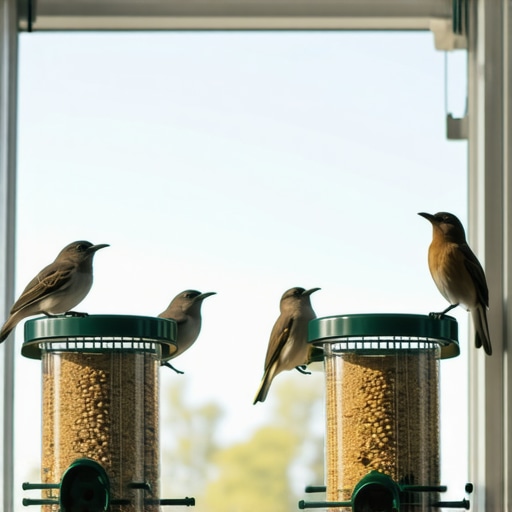
The Engineering Crisis of Modern Glazing and Avian Observation
In twenty-five years of glazing, I have seen the evolution of the residential window from a simple single-pane wood sash to the sophisticated, multi-layered thermal barriers we install today. We are currently staring down the barrel of 2026 energy codes that demand unprecedented performance, often pushing us toward quadruple glazing options and vacuum-insulated glass (VIG). These units are not just ‘windows’; they are pressurized, gas-filled envelopes. When a homeowner slaps a ten-pound plastic bird feeder onto the center of a high-performance lite using suction cups, they aren’t just watching birds—they are courting a catastrophic seal failure. A homeowner recently called me in a panic because their new, high-efficiency windows were ‘sweating’ in a perfect circle right where their feeder was mounted. I walked in with my hygrometer and showed them the humidity was 60%, and that suction cup was creating a localized cold spot on the #4 surface of the glass, causing the moisture in the air to reach its dew point. It wasn’t a manufacturer defect; it was a physics problem caused by improper attachment.
“Installation is just as critical as the window performance itself. A high-performance window installed poorly will fail.” – AAMA Installation Masters Guide
If you are investing in window performance testing to ensure your home meets the new 2026 standards, you must understand the ‘Shingle Principle’ of water management and the mechanical limits of your spacers. Most bird feeders create eccentric loads that the glazing bead was never designed to handle. Furthermore, if you have invested in window tinting services, those aftermarket or factory-applied films are susceptible to ‘solar soak,’ where the heat trapped behind a suction cup can cause the glass to expand at a different rate than the surrounding shaded area, leading to thermal stress cracks. To enjoy the local fauna without requiring window frame repair or a full IGU (Insulated Glass Unit) replacement, we need to look at attachments that respect the rough opening and the structural integrity of the window jamb extension.
1. Tension-Fit Sill Brackets
The safest place to put weight on a window is not the glass, but the sill. A tension-fit bracket utilizes the window jamb extension to provide a cantilevered platform for the feeder. By anchoring into the wood or composite extension rather than the sash, you avoid putting any pressure on the weep holes or the secondary seal of the glass unit. This is especially critical for 90-minute fire windows where the glass is significantly heavier and the frame is engineered for specific thermal expansion. A sill-mounted system ensures that the weight of the seed and the birds is transferred directly to the wall’s structural framing via the shim points, rather than hanging off the operable sash.
2. Integrated Screen Rail Hangers
If you are utilizing professional insect screen services, you likely have high-tension aluminum or fiberglass screens. Modern 2026-compliant windows often feature a dedicated screen track. Heavy-duty hangers can be engineered to sit within this track, distributing the weight across the entire height of the frame. This prevents the ‘bowing’ effect that occurs when items are hung directly from the muntin or the glass. By keeping the feeder two to three inches away from the glass surface, you also maintain airflow, preventing the localized heat buildup that can ruin window tinting services or degrade the Low-E coating on the #2 surface in southern climates.
“The NFRC rating of a window is only valid if the unit remains structurally sound and the gas fill is maintained within the hermetically sealed space.” – NFRC Performance Standards
3. Magnetic Stand-Off Systems
For those with geometric window shapes where traditional brackets won’t fit, magnetic stand-off systems are the next frontier. These use high-strength neodymium magnets—one inside, one outside—to hold the feeder. However, as a master glazier, I warn you: these must be used with a soft-gasket interface. In cold climates, like Minneapolis or Chicago, where quadruple glazing options are becoming the norm to keep the U-factor below 0.15, these magnets must be placed near the edge of the glass, close to the spacer. This avoids the ‘drum-head’ effect where the center of the glass flexes inward, potentially touching the inner panes and creating a thermal bridge that defeats the purpose of the argon or krypton gas fill.
4. Structural Header Anchors for Greenhouse Window Services
If you have a specialized setup like greenhouse window services, you have a unique opportunity to mount feeders to the structural header. Instead of touching the glass at all, these attachments use a slim-profile arm that reaches out from the rough opening above the window. This is the gold standard for bird watching. It allows for the feeder to be positioned perfectly for visibility without interfering with the sash operation or the glazing bead. It also ensures that if a larger animal, like a squirrel or a heavy woodpecker, lands on the feeder, the torque is applied to the house’s framing rather than the delicate 2026 seal system. Remember, a seal failure in a quadruple-pane unit isn’t just a foggy window; it’s a massive loss of R-value that you’ll feel every winter.
Before you hang anything on your windows, check your warranty. Most high-end manufacturers will void coverage for seal failure if they find evidence of suction cups or aftermarket attachments that interfere with the thermal performance of the glass. By using these four methods, you protect your investment while still enjoying the view. Water management is a science, and so is bird watching—don’t let a $20 feeder lead to a $2,000 window frame repair bill.