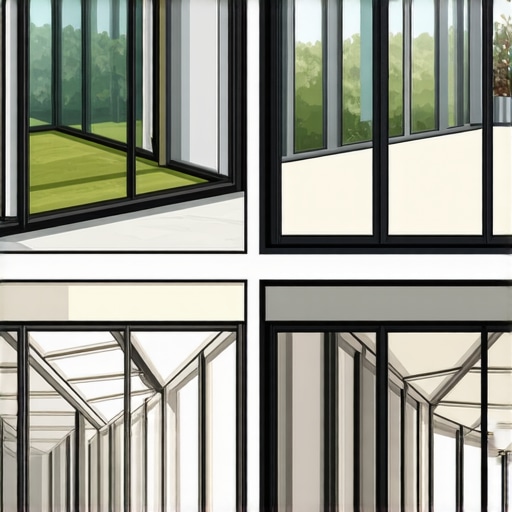
The 115-Degree Reality: Why Your Conservatory is a Solar Kiln
I’ve spent 25 years on ladders, shimming frames and beads, and I’ve seen more failed ‘sunrooms’ than I care to count. A homeowner called me last summer in a panic because their brand-new conservatory was hitting 110 degrees by noon. I walked in with my hygrometer and a BTU meter; the glass was literally radiating heat like a ceramic stove. It wasn’t the windows that were ‘broken’; it was the homeowner’s understanding of the Solar Heat Gain Coefficient (SHGC). They had been sold a bill of goods by a salesman who didn’t know a muntin from a weep hole. If you’re planning for the projected heatwaves of 2026, you need to understand that a conservatory is essentially a hole in your house’s thermal envelope. To fix it, you have to stop thinking about ‘windows’ and start thinking about spectrally selective glazing and thermal management.
“Installation is just as critical as the window performance itself. A high-performance window installed poorly will fail.” — AAMA Installation Masters Guide
Fix 1: Retrofitting with Spectrally Selective Low-E Coatings
Most people hear ‘Low-E’ and think it’s a magic shield. It’s not. It’s a series of microscopic metallic oxide layers—usually silver—deposited on the glass surface. In a conservatory context, the position of that coating is everything. For preventing overheating, we must talk about Surface #2. In a dual-pane Insulated Glass Unit (IGU), Surface #1 is the exterior; Surface #2 is the inside of the outer pane. By applying a spectrally selective coating on Surface #2, we reflect long-wave infrared radiation (heat) back toward the sun before it even crosses the 1/2-inch argon-filled gap. This is the bedrock of energy efficient windows. When I perform an oriel window repair or a conservatory retrofit, I look for a SHGC of 0.25 or lower. If you have old clear glass, you’re basically sitting in a greenhouse without a fan. Upgrading the glass package is more effective than any HVAC system you can bolt onto the wall.
Fix 2: Managing the Roof with Fixed Skylight Services
The roof is where the battle is won or lost. Heat rises, but in a conservatory, the sun beats down vertically. Standard glass roofs are obsolete for 2026 climates. I recommend fixed skylight services that utilize tinted Laminated Glass. Why laminated? Beyond the safety factor of it not shattering into shards, the PVB (polyvinyl butyral) interlayer provides an additional 99% UV blockage. This protects your furniture from fading and adds a layer of acoustic damping. If you have round top window services integrated into your conservatory gables, the thermal expansion of the radius frames is much higher than standard square units. You need high-grade window caulking services using 100% silicone or hybrid polymers that can handle the 30% movement of a dark-colored frame in July. A ‘caulk-and-walk’ installer will use cheap latex that cracks in six months, leading to air leaks that destroy your thermal efficiency.
Fix 3: Strategic Shading and Roller Shade Install
Physics dictates that even the best glass will eventually heat up. This is where a roller shade install becomes a technical necessity, not an aesthetic choice. But here is the professional secret: you want the shade to have a reflective backing. When solar energy hits the glass and passes through, the shade should reflect that energy back out through the glazing before it converts into long-wave heat that gets trapped inside. This is part of the integrated fenestration strategy. I often tell clients that if they are investing in stained glass window services for that decorative touch, they must protect those pieces with an exterior clear sacrificial layer. The same applies to the conservatory—mechanical shading acts as the first line of defense. It reduces the Visible Transmittance (VT) just enough to keep the room usable during peak solar hours.
“Fenestration products shall be rated, certified, and labeled in accordance with the NFRC 100 and 200 standards to ensure actual thermal performance matches laboratory claims.” — NFRC Performance Standards
Fix 4: Proper Ventilation and Emergency Egress Windows
You cannot trap heat in a glass box and expect it to stay cool without airflow. Many conservatories are built with too many fixed units and not enough operable sashes. By installing emergency egress windows—which are required by code in many living spaces anyway—you create massive portals for cross-ventilation. I prefer an out-swinging casement for this. When the sash is open, it acts like a sail, catching the breeze and directing it inward. While we are talking about functionality, don’t forget the smaller residents. A cat window perch installation can be integrated into the sill of a cooler, north-facing unit to keep pets off the scorching floor. Finally, always look for lifetime window guarantees that specifically cover seal failure. In a high-heat conservatory, the spacers between the glass panes expand and contract violently. A cheap ‘warm-edge’ spacer will fail, the argon will leak out, and you’ll have a foggy, useless piece of glass within five years. True mastery is in the details—from the sill pan that catches condensation to the flashing tape that ensures the rough opening is watertight. Don’t let a salesman talk you into triple-pane glass if your frame can’t handle the weight; focus on the SHGC and the installation quality instead.