The Invisible Failure: Why Your Windows Are Failing Without You Knowing It
I recall a specific homeowner who called me out to a high-end property because their brand-new, expensive windows were ‘sweating’ on the interior glass. They were convinced the manufacturer had sent them lemons. I walked in with my hygrometer and a thermal camera and showed them that the interior humidity was spiked at 62% because their HVAC system wasn’t properly balanced with the building envelope’s new airtightness. It wasn’t the windows; it was a fundamental misunderstanding of how a hole in the wall manages heat and moisture. But more often than not, the issue is the window—specifically, a compromised seal in the Insulated Glass Unit (IGU) that remains invisible to the naked eye until the desiccant is saturated and the glass fogs permanently.
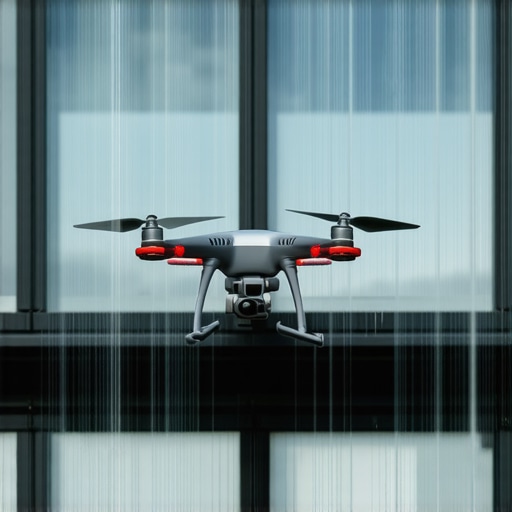
By 2026, the industry has shifted. We no longer wait for the ‘fog’ to tell us a window has failed. We use drone-mounted thermography and ultrasonic sensors to find these leaks before they cause structural rot. As a master glazier for over 25 years, I’ve seen everything from botched aluminum window framing in high-rise curtain wall services to residential round top window services where the radius was shimmed so poorly the frame racked within two seasons. A window is a precision instrument, not just a piece of glass held by a frame.
“Installation is just as critical as the window performance itself. A high-performance window installed poorly will fail.” — AAMA Installation Masters Guide
1. Thermal Anomaly Mapping: Detecting Gas Dissipation
The first way drones revolutionize window installation and repair services is through high-resolution thermal mapping. In a cold climate, we prioritize the U-Factor—the rate of heat loss. Modern IGUs are filled with Argon or Krypton gas. These gases are denser than air and provide the thermal resistance needed to keep the interior sash warm. When a seal fails, the gas escapes and is replaced by moisture-laden air. A drone equipped with a FLIR sensor can scan a building’s exterior and identify specific units where the surface temperature deviates by even 0.5 degrees. This is ‘Glazing Zooming’ at its finest: we aren’t just looking for a draft; we are identifying the failure of the Low-E coating on Surface #3 to reflect long-wave infrared radiation back into the room. If that heat is escaping, the drone sees the ‘hot spot’ on the exterior glass face, signaling a failed seal long before the homeowner notices a spike in their heating bill.
2. Ultrasonic Leak Detection in Vertical Sliders
Vertical slider repair is one of the most common calls I get. Most homeowners don’t realize that the air infiltration often happens at the meeting rail or the weep hole. Drones can now carry ultrasonic emitters that ‘ping’ the window assembly. If there is a microscopic gap in the glazing bead or a failure in the flashing tape behind the brick mold, the sound waves penetrate the gap and are recorded by the drone’s receiver. This is critical for storm window services and vertical slider repair where traditional visual inspections miss the internal structural failures. When we find these leaks, we often discover the rough opening was never properly flashed with a sill pan. Water isn’t just a nuisance; it’s a structural predator. If the shingle principle isn’t followed—where every layer overlaps the one below it—gravity will eventually drive water into your headers and jack studs.
“Standard Practice for Installation of Exterior Windows, Doors and Skylights requires that the flashing system must be integrated with the water-resistive barrier to ensure a continuous drainage plane.” — ASTM E2112
3. Pressure-Differential Analysis for Curtain Walls
In curtain wall services for commercial or high-end residential projects, the drone acts as a mobile pressure tester. By flying close to the aluminum window framing while the building’s HVAC system creates a pressure differential, the drone can detect the exact point where air is ‘whistling’ through a failed gasket or a poorly seated muntin. This is vital for window condensation solutions. If you have condensation between the panes, your seal is gone. If you have it on the inside, your low threshold windows might be leaking air at the floor level, cooling the glass below the dew point. We also look at cellular shade integration during these scans. If a shade is mounted too close to the glass, it can create a ‘thermal chimney’ effect that puts undue stress on the glazing bead, leading to premature seal failure.
The Maintenance Plan: Avoiding the Full Tear-Out
The goal of window maintenance plans is to catch these issues while they are still ‘repairs’ rather than ‘replacements.’ A vertical slider repair might involve simply replacing the balance or the weatherstripping. But if you ignore a seal leak, you’re looking at a full IGU replacement. When we perform these drone-assisted inspections, we are looking for the integrity of the shim placement and ensuring that the frame hasn’t bowed. In aluminum window framing, we specifically check the thermal breaks. Aluminum is a massive conductor of heat; without a high-density polyamide thermal break, that frame will ‘ghost’ (collect dust due to condensation) and eventually corrode. My advice? Don’t trust an installer who just uses a ‘caulk-and-walk’ method. If they aren’t talking about the rough opening tolerances and sill pan height, they aren’t glaziers—they’re just handymen with a ladder. Proper energy-efficient performance requires technical precision and a deep understanding of the physics of the building envelope.