The Engineering of Modern Home Security
Window security has moved far beyond the simple sweep latch. In my 25 years in the glazing trade, I have seen too many homeowners rely on a single piece of hardware to hold a sash against both a burglar and a 70 mph wind gust. It does not work. When we talk about a secure 2026 home, we are talking about mechanical compression. A multi-point lock is not just a security feature; it is a structural necessity that pulls the sash into the frame at multiple contact points, ensuring the weatherstripping is fully engaged and the thermal envelope is sealed.
A few years ago, I was called to a residence where the owner complained that their new windows were sweating in the corners during a cold snap. I walked in with my hygrometer and a digital caliper. The windows were high-end, but the installer had failed to adjust the multi-point cams. The humidity was sitting at 55 percent, and because the sash was not compressing the gasket, cold air was infiltrating, dropping the interior surface temperature below the dew point. It was not a window failure; it was a mechanical alignment failure. This is why understanding the mechanics of your hardware is as vital as the glass itself.
“Installation is just as critical as the window performance itself. A high-performance window installed poorly will fail.” AAMA Installation Masters Guide
Step 1: Structural Rectification and Window Frame Repair
You cannot install a high-security multi-point system into a failing frame. The first step in any secure installation is a rigorous window frame repair. We start by checking the rough opening. If the frame has settled or is out of square by more than 1/8 of an inch, the multi-point hardware will bind. I have seen gearboxes stripped out because an installer tried to force a lock on a bowed jamb. We use high-density plastic shims to level the sill and ensure the side jambs are perfectly plumb. This ensures that when the window handle replacement is completed, the drive bar moves freely within the glazing bead channels.
During this phase, we also address the window flashing installation. Security is moot if the wall behind the window is rotting. We utilize a self-adhering flashing tape applied in a shingle-fashion, starting from the sill and moving up the jambs. The sill pan must be sloped toward the exterior to ensure any moisture that bypasses the primary seals is directed out through the weep hole system. Without a proper sill pan, you are just waiting for a structural failure that no lock can fix.
[IMAGE_PLACEHOLDER]
Step 2: Hardware Synchronization and Handle Replacement
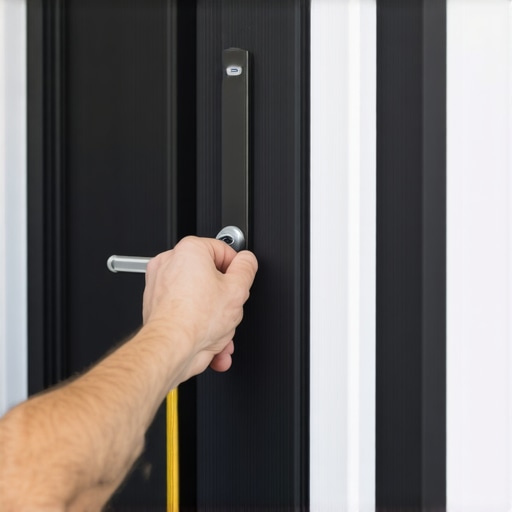
The heart of the 2026 security standard is the multi-point drive train. Unlike a standard latch, a multi-point system uses a series of mushroom cams or deadbolts that slide into keepers located on the frame. When performing a window handle replacement, we must ensure the gear ratio of the new handle matches the drive bar travel. We look for hardware with an anodic coating to prevent corrosion, especially in coastal environments where salt air can seize a gearbox in a single season.
For those with architectural round top window services, this becomes even more complex. The curved nature of the sash requires flexible drive bars that can maintain tension around a radius. We also integrate tempered glass installation at this stage for any glass within 18 inches of the floor or near a door. Tempered glass is four to five times stronger than standard annealed glass, and when combined with a multi-point lock, it creates a formidable barrier against forced entry. If the sash is part of a larger curtain wall services project, we often specify laminated glass for its superior sound dampening and impact resistance.
Step 3: Integrating the Thermal Shield and Hydrophobic Treatments
A secure home is also an efficient one. Once the mechanical components are tuned, we focus on the glass performance. In southern climates, we prioritize the Solar Heat Gain Coefficient (SHGC). We want the Low-E coating on Surface #2 to reflect infrared radiation before it enters the glass. In northern climates, we move that coating to Surface #3 to keep the heat inside. This thermal logic is what prevents the frame from expanding and contracting excessively, which would otherwise throw the multi-point locks out of alignment.
“The NFRC label provides the only reliable way to determine window energy performance and certify that a product meets building code.” NFRC Performance Standards
Finally, we apply hydrophobic window treatments to the exterior. These coatings use silane chemistry to create a high contact angle for water droplets. This means that exterior window cleaning becomes a matter of a simple rinse rather than a scrub, as dirt cannot bond to the glass. This is critical for maintaining the visibility of your high-performance glazing. We often pair these with roller shade install services on the interior to manage glare and provide an additional layer of privacy. Many high-end manufacturers now offer lifetime window guarantees, but read the fine print: these guarantees often require documented annual maintenance of the hardware and weep holes.
The Mechanical Reality of the 2026 Standard
Securing a home is a holistic process. It starts with the window flashing installation to protect the structure, moves through window frame repair to ensure a square opening, and culminates in the precise calibration of multi-point locking hardware. Do not accept a caulk-and-walk installation. Demand that your installer shows you the compression of the bulb seal when the lock is engaged. In the glazing world, millimeters matter. A secure home is a quiet, dry, and efficient home, and it all starts with the hardware that holds the line against the elements.