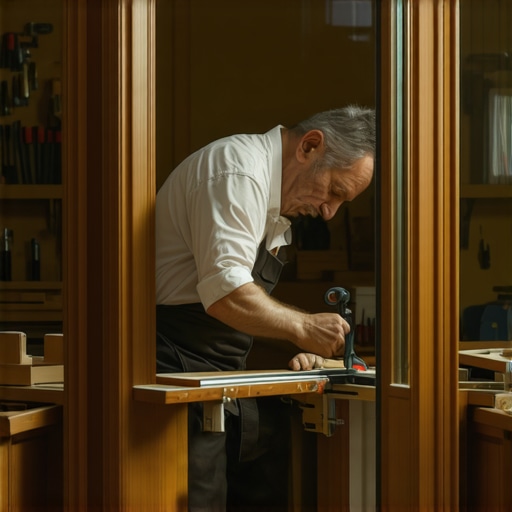
When I stepped onto the site of a 1910 Victorian restoration last autumn, the homeowner was convinced the original fenestration was a total loss. I climbed the scaffolding and found that the previous installer had committed the ultimate sin of the ‘caulk-and-walk’ amateur: they had blocked the weep holes and applied a thick bead of silicone directly over the joint between the sill and the jamb. This trapped moisture behind the wood, turning the structural pine into a soft, fibrous pulp. This is the reality of wood rot window repair; it is rarely the age of the wood that fails, but rather a failure in the management of the dew point and the shingle principle. For those looking ahead to a 2026 restoration, understanding the physics of your building envelope is the difference between a century of service and a decade of decay.
The Anatomy of Fenestration Failure
Before we discuss the tactics for salvage, we must perform an autopsy on why wood windows fail. Most issues stem from the ‘Rough Opening’ being improperly flashed or the failure to account for thermal expansion. Wood is a dynamic material; it breathes, expands, and contracts with relative humidity. When you constrain it with modern sealants that lack elasticity, you create stress points where water ingress is inevitable. We aren’t just looking at a hole in the wall; we are looking at a complex thermal bridge. In northern climates, the primary enemy is heat loss and the resulting condensation on the interior glazing bead. If the interior humidity is 50% and the outside temperature is 10 degrees Fahrenheit, the glass surface temperature often drops below the dew point. That liquid water then runs down the sash, pools on the bottom rail, and begins the slow process of lignin degradation.
“Installation is just as critical as the window performance itself. A high-performance window installed poorly will fail.” – AAMA Installation Masters Guide
To combat this, professional window installation services must prioritize the U-Factor, which measures the rate of non-solar heat flow. For a 2026 restoration, we are no longer looking at simple single-pane glass. We are looking at ways to integrate modern thermal performance into historic profiles, sometimes even considering quadruple glazing options in extreme environments where the R-value needs to rival that of the surrounding wall insulation.
Tactic 1: Structural Consolidation and Epoxy Stabilization
The first tactic in any wood rot window repair is stabilization. We do not immediately reach for the saw. Instead, we use liquid epoxies that penetrate the wood fibers. This isn’t a cosmetic fix; it is a chemical rebonding of the wood’s cellular structure. You must drill ‘reservoir’ holes into the affected area, allowing the epoxy to saturate the grain. This is particularly effective for sills and the lower portions of the sash where water collection is highest. Once the wood is consolidated, a structural filler is used to rebuild the profile. This preserves the original muntin profile and the historic character of the building while providing a substrate that is more moisture-resistant than the original timber.
Tactic 2: Managing the Thermal Envelope with Advanced Glazing
One of the biggest hurdles in restoration is the ‘Glass Class’ problem. How do you get 21st-century performance out of a 19th-century frame? While quadruple glazing options are often too heavy for historic counterbalance systems, we can look at vacuum-insulated glass (VIG) or specialized low-E coatings. In our cold-climate logic, we want the low-E coating on the #3 surface. This reflects long-wave infrared radiation back into the room, keeping the interior pane warmer and significantly reducing the risk of condensation. For commercial projects or high-end residential storefront window install, we are now seeing the integration of electrochromic smart windows. These units allow the homeowner to modulate the solar heat gain coefficient (SHGC) with the touch of a button, darkening the glass during peak summer sun and clearing it during the winter to harvest passive solar heat.
Tactic 3: The Shingle Principle and Flashing Integrity
If you are performing a full-frame replacement rather than a sash repair, the flashing system is your only defense against rot. I have seen countless window warranty service claims denied because the installer failed to integrate the sill pan with the weather-resistive barrier (WRB). The ‘Shingle Principle’ dictates that every layer of the building must overlap the layer below it. This means the head flashing goes under the WRB, and the sill pan must be sloped toward the exterior with a dedicated weep path. When we do a storefront window install, we often utilize a sub-sill with an integrated end dam to ensure that any water that gets past the primary seals is evacuated before it touches the framing.
“Field measurement of air leakage and water penetration is the only way to verify that the installation meets the design intent.” – ASTM E2112 Standard Practice
Tactic 4: Anti-Fog Coatings and Modern Storm Window Services
For many historic restorations, the most effective path forward is the use of high-performance storm window services. Modern storm units are no longer the clunky aluminum eyesores of the 1970s. They are precision-engineered sashes with anti-fog window coatings and low-E glass. By adding a storm window, you create a dead air space that acts as a thermal buffer, moving the dew point from the historic sash to the storm unit. This protect the wood rot window repair work you’ve done and effectively doubles the U-value of the opening. Furthermore, the use of window safety glass in these storm units provides an added layer of security and impact resistance without altering the original look of the home.
Tactic 5: Hardware Calibration and Air Infiltration
A window is an operable machine. In 2026, we focus heavily on the ‘closing force’ and the compression of weatherstripping. If the sash is not pulling tight against the parting bead, the U-factor is irrelevant because air infiltration will bypass the glass entirely. We use siliconized bulb seals and high-performance shims to ensure the sash is perfectly square within the rough opening. A shim should never be driven so hard that it bows the jamb; it is a precision tool used to ensure the operable parts of the window engage their seals uniformly. This attention to detail is what separates a professional window installation service from a general laborer. When the hardware is properly calibrated, the window should lock with a firm, airtight ‘thunk,’ signaling that the thermal bridge is successfully managed.
The Long-Term View: Warranty and Maintenance
Finally, let’s talk about the window warranty service. Most modern warranties are pro-rated and often voided by improper installation or the use of non-breathable paints. In a restoration context, you need a warranty that covers the labor of the wood rot window repair as much as the materials. Wood windows require a maintenance cycle—typically a fresh coat of high-quality paint or oil every 5 to 7 years. If you ignore this, the cycle of decay begins anew. By following these five tactics, you are not just fixing a window; you are preserving a piece of architectural history with the scientific rigor of modern glazing technology. Whether you are dealing with a simple double-hung or a complex storefront window install, the physics remain the same: manage the water, control the air, and respect the material. “,”image”:{“imagePrompt”:”A macro photograph of a professional glazier applying liquid epoxy to a weathered wooden window sill, with technical tools like shims and flashing tape visible in a clean, organized workspace.”,”imageTitle”:”Professional Wood Window Restoration Process”,”imageAlt”:”A specialist repairing wood rot on a window sill using epoxy stabilization techniques.”},”categoryId”:1,”postTime”:””}