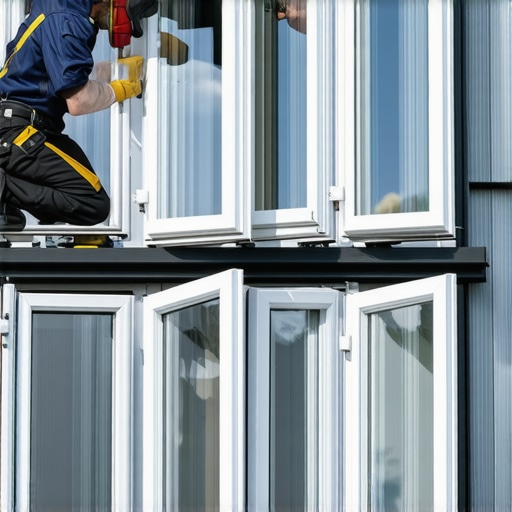
The Anatomy of an Inefficient Aperture
I remember a specific call last February in a suburb of Chicago. The homeowner was convinced their new hopper windows were defective because the sills were consistently soaked. I walked in with my hygrometer and a thermal imaging camera. The reading? 62% relative humidity at 70 degrees Fahrenheit. It wasn’t a manufacturing defect in the sash; it was a total failure of the home’s moisture management system being unfairly blamed on the glass. This is the reality of residential glazing: windows are the messengers of building science failures. When we talk about a drafty hopper window, we aren’t just talking about a gap; we are talking about a breakdown in the thermal envelope that involves pressure differentials and the ‘Shingle Principle’ of water shedding. To fix a hopper window for 2026 and beyond, you have to look past the surface and examine the physics of the opening.
“Installation is just as critical as the window performance itself. A high-performance window installed poorly will fail.” – AAMA Installation Masters Guide
Fix 1: The Compression Seal and Weatherstripping Overhaul
Hopper windows are unique because they hinge at the bottom and open inward. This design makes them inherently susceptible to gravity-induced sash sag. If the glazing bead is tight but the air is still whistling through, your primary compression seal has likely reached its service life. In 2026, we are moving away from standard felt or pile weatherstripping. To truly stop a draft, you need EPDM (Ethylene Propylene Diene Monomer) or silicone bulb seals. These materials maintain their ‘memory’ even after thousands of compression cycles. When you shim the window during a repair, you must ensure the rough opening allows for a perfectly square frame. If the frame is even 1/16th of an inch out of square, the bulb seal won’t compress evenly, creating a micro-gap. I’ve seen high rise window services struggle with this on upper-floor transoms where wind loads are extreme. The solution is often a multi-point locking system that pulls the sash tight against the frame at three distinct points rather than just a single center latch.
Fix 2: Advanced Window Performance Testing and Sensor Integration
You can’t fix what you can’t measure. In my 25 years, the biggest shift I’ve seen is the move toward window performance testing at the residential level. This involves a modified blower door test or a smoke pencil to identify exactly where the air infiltration (AI) is occurring. For 2026, we are increasingly seeing the adoption of smart window sensors. These aren’t just security alarms; modern sensors can detect the ‘seal integrity’ by measuring pressure variances between the IGU (Insulating Glass Unit) panes. If your hopper window is part of a whole house window replacement strategy, insist on a performance grade (PG) rating that exceeds your local code. A draft is often just air moving from high pressure to low pressure through a weep hole that hasn’t been properly baffled. If you feel a cold spot, it might not be air at all, but rather radiant heat loss. This is where tempered glass installation with a Low-E coating on Surface #3 becomes critical for Northern climates, reflecting that long-wave infrared heat back into your living space.
“Proper flashing and sealants are the only defense against structural rot and air infiltration at the fenestration interface.” – ASTM E2112 Standard Practice
Fix 3: Glazing Unit Upgrades—Laminated and Tempered Logic
Sometimes the ‘draft’ is actually a convective loop. Cold air hits the interior surface of the glass, cools down, becomes denser, and ‘falls’ toward the floor, creating the sensation of a breeze. To stop this, you need to address the U-Factor. Standard single-pane hoppers are dinosaurs. For 2026, laminated glass services are becoming the gold standard for basement hoppers specifically because of their acoustic dampening and thermal properties. Laminated glass consists of an interlayer of PVB (Polyvinyl Butyral) sandwiched between two layers of glass. This not only provides security but significantly reduces the center-of-glass heat transfer. If your hopper is near the floor, tempered glass installation is a safety requirement, but the real magic happens in the spacer bar. Swap out old aluminum spacers for warm-edge ‘Intercept’ or foam spacers. This breaks the thermal bridge at the edge of the sash, preventing the perimeter condensation that leads to mold. While a garden window install might focus on SHGC for plants, a hopper is all about the U-Factor.
Fix 4: The ‘Sill Pan’ and Flashing Tape Reconstruction
If you see water or feel a draft at the very bottom of the window, the flashing tape or the sill pan has failed. Many installers ‘caulk and walk,’ relying on a bead of sealant to do the job that should be done by gravity. A proper hopper repair in 2026 involves pulling the interior trim to inspect the rough opening. We look for the ‘Shingle Principle’—is the head flashing tucked under the house wrap? Is there a sloped sill pan with an integrated back dam? If not, air will bypass the window frame entirely and enter through the wall cavity. This is why low threshold windows and hoppers require such precise quality control. During a whole house window replacement, I always tell clients that the window is just a component of a larger water management system. We use flashing tape that is chemically compatible with the window frame material (vinyl, fiberglass, or wood) to ensure a permanent air seal. This isn’t just about comfort; it’s about protecting the structural header from rot that can cost tens of thousands to repair down the line.
Conclusion: Precision Over Price
Stopping a draft in a hopper window isn’t a DIY job for a Saturday afternoon with a tube of cheap caulk. It requires an understanding of thermodynamics, mechanical tolerances, and material science. Whether you are looking at high rise window services for a condo or a simple basement fix, the goal is a hermetic seal when the operable sash is closed. Don’t be swayed by high-pressure sales pitches for ‘miracle’ glass. Look at the NFRC label. Look at the AI (Air Infiltration) rating. A quality hopper window, properly shimmed and flashed with a sill pan, should be as airtight as the wall around it. In the world of glazing, we don’t just fill holes; we engineer environmental barriers. Focus on the quality of the installation, and the energy savings will follow naturally. The draft isn’t an inevitability; it’s a sign that the science of your home’s envelope is out of balance.
This article really underscores the importance of integrating building science principles into window repairs, especially with aging homes. I had a similar experience where simply replacing the weatherstripping didn’t solve the draft issue; it was only after inspecting the sill pan and making sure it was properly sloped and flashed that the problem was truly resolved. It made me think about how often we overlook the water management systems surrounding fenestration. Do others find that upgrading the entire water and air sealing system yields better long-term results than just focusing on the window itself? I’d love to hear about methods or products that have worked well for different climates or building types. Sometimes, I feel that the complexity of these fixes discourages homeowners from doing the necessary upgrades, but as the article suggests, precision truly pays off in energy efficiency and durability.