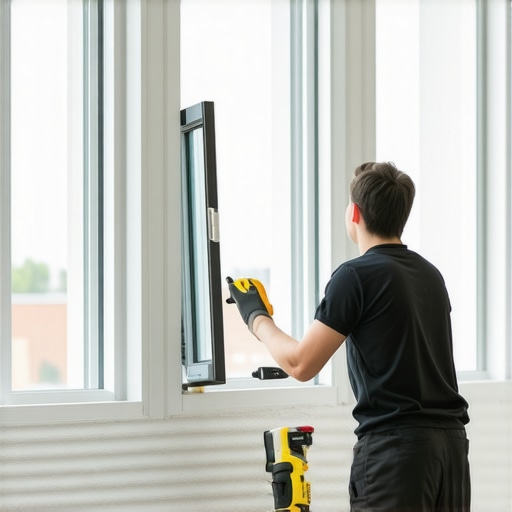
The Anatomy of an Air Leak: Why Your 2026 Energy Bill Starts Today
I have spent nearly three decades looking at the world through glass, and if there is one thing I have learned, it is that a window is only as good as the seal that surrounds it. Most homeowners look at their monthly utility costs and blame the glass, but as a master glazier, I can tell you that the culprit is usually the invisible movement of air. I recall a specific incident—a condensation crisis—where a homeowner called me in a panic because their new windows were ‘sweating’ and the floorboards were damp. I walked in with my hygrometer and showed them that their indoor humidity was nearly 60% while the exterior temp was dropping toward zero. It was not a window failure; it was a management failure. The seals were not compressing, allowing the dew point to migrate to the interior sash surface. This is the reality of residential fenestration: physics does not care about your marketing brochure.
“Installation is just as critical as the window performance itself. A high-performance window installed poorly will fail.” – AAMA Installation Masters Guide
If you want to see a lighter energy bill by 2026, we have to talk about weatherstripping. This is not just ‘sticky foam’ from a big-box store. We are talking about the mechanical interface between the operable sash and the frame. In cold climates like Chicago or Minneapolis, heat loss via air infiltration is the primary enemy. When the wind hits your house, it creates a pressure differential. If your weatherstripping is brittle or misaligned, that pressure pushes cold air through the rough opening and past the glazing bead. You are essentially paying to heat the neighborhood.
1. The Casement Compression Fix: Locking Out the Draft
In casement window installation, the primary advantage is the compression seal. Unlike a sliding window, a casement closes like a refrigerator door. However, I often see installers neglect the snubbers or fail to shim the frame straight, which leads to ‘frame bow.’ When the frame bows, the bulb weatherstripping cannot make full contact. To fix this for 2026, you must inspect the EPDM or silicone bulb seals. If they have ‘taken a set’—meaning they stayed compressed and lost their bounce—they must be replaced. A proper seal should show a visible ‘squish’ when the locking handle is engaged. This is crucial for window performance testing; even a 1/16th-inch gap can increase your U-factor effectively by 20% due to convective heat loss.
2. Horizontal Slider Windows: Tackling the Meeting Rail
Horizontal slider windows are notoriously difficult to seal because they rely on friction (pile) weatherstripping. Most of the air leakage occurs at the meeting rail—the vertical part where the two sashes overlap. If you feel a draft there, your pile weatherstripping has likely flattened out or accumulated enough dirt to become abrasive. In my window warranty service calls, I frequently find that the weep hole is clogged, which backs up water and eventually rots the bottom pile. Replacing worn-out pile with a high-fin variant—a strip with a plastic fin in the center of the fuzz—provides a mechanical barrier that standard pile lacks. This is a technical necessity for maintaining the building envelope’s integrity.
“The air leakage rate shall be determined in accordance with ASTM E283. Proper sealing of joints and junctions is mandatory to prevent thermal bypass.” – ASTM E2112 Standard Practice
3. Heritage Window Repair: Bringing Science to History
When dealing with heritage window repair, we cannot just rip out the wood and replace it with vinyl. That is a crime against architecture. Instead, we use ‘Glazing Zooming’ to focus on the muntin and the weight pockets. The fix here is the installation of bronze spring weatherstripping or integrated silicone beads into a newly routed kerf in the sash. This transforms a drafty 1920s double-hung into a unit that rivals modern performance without losing its soul. For dormer window services, where the window is exposed to higher wind loads on the roofline, these seals are your only defense against the stack effect pulling heat out of your attic.
4. Managing the Greenhouse and Specialty Glazing
Greenhouse window services often reveal the worst thermal performance because they have five surfaces exposed to the elements. For these, and for 60-minute fire glazing in multi-family units, the seals must be high-temperature resistant and perfectly continuous. If you have a greenhouse window, check the sill pan. If there is water sitting there, your exterior seals are gone. For 2026, we are looking at hybrid sealants and closed-cell foam tapes that do not degrade under UV exposure. Similarly, window condensation solutions often involve installing warm-edge spacers and ensuring the interior weatherstripping is airtight to prevent moist room air from reaching the cold glass edge. If you are serious about performance, stop looking for a ‘caulk-and-walk’ fix and start looking at the mechanical tolerances of your sashes. Real efficiency is a game of millimeters.
This article really hits home for me, especially regarding the importance of proper weatherstripping and seal maintenance. In my experience, most homeowners underestimate how crucial it is to inspect and replace seals periodically. I once worked on a vintage home where the owner thought the draft was from the windows themselves, but a simple check revealed the weatherstripping was completely hardened and cracked. Replacing it made an immediate difference in energy efficiency. I think what often gets overlooked is the alignment of sashes and ensuring hardware like locks and latches are properly adjusted to apply full compression on seals. Has anyone here found that upgrading to high-fin pile or silicone seals provides a noticeable improvement in tightness, even on older windows? It seems these small upgrades can have a surprisingly big impact on energy bills if tackled early.