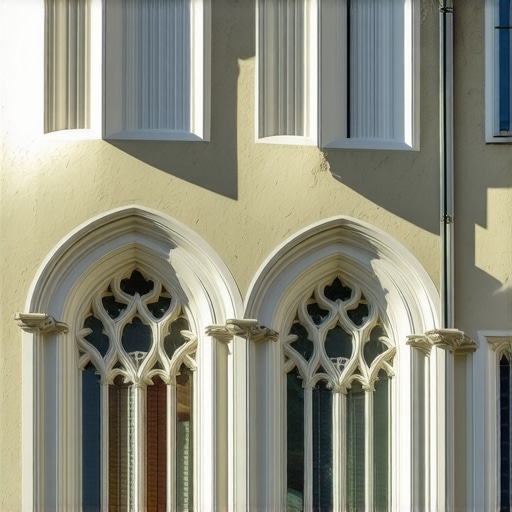
The Anatomy of a Failing Oriel: Why Your Restoration is at Risk
An oriel window is a masterpiece of cantilevered engineering, but in my 25 years of glazing, I have seen more of these fail than any other architectural feature. Because they do not rest on a foundation, they are subject to unique gravitational stresses and thermal fluctuations. When we talk about a 2026 restoration, we are not just looking at a fresh coat of paint; we are looking at the molecular integrity of the glazing and the structural management of the Rough Opening. A window is a thermal bridge, and if that bridge is not engineered correctly, you are inviting rot into the very bones of your home.
A few years ago, I was called to a historic property where the owner was convinced their new oriel windows were defective. They were ‘sweating’ so profusely that the mahogany sills were starting to cup. I walked in with my hygrometer and a thermal imaging camera. The interior humidity was hovering at 65 percent while the outside air was a biting 10 degrees. I had to explain that it was not a glass failure, but a failure of the home’s atmospheric management combined with a lack of warm-edge spacers. This is the reality of modern restoration: you must balance historical aesthetics with the unforgiving laws of thermodynamics.
“Installation is just as critical as the window performance itself. A high-performance window installed poorly will fail.” AAMA Installation Masters Guide
Tactic 1: Structural Stabilization and Sill Pan Integrity
The first point of failure in an oriel is the transition between the house wall and the window floor. Because these units hang over the exterior, the sill is often neglected during a standard vinyl window replacement. You cannot simply slide a new unit in and hope for the best. You must install a secondary drainage plane. This involves a custom-fabricated Sill Pan made of high-density polyethylene or lead-coated copper. This pan ensures that any water that bypasses the primary Glazing Bead is directed back to the exterior through dedicated Weep Hole channels. When we perform gable window installation or dormer window services, we see the same issue: installers rely on caulk rather than the shingle principle. For a 2026 restoration to last, you must use high-performance Flashing Tape that is chemically compatible with your weather-resistive barrier. If you are shimming the unit, use composite shims that will not rot or compress over time. A sagging oriel will eventually crack the seals of your argon gas filled windows, leading to premature fogging and total thermal failure.
Tactic 2: Advanced Thermal Defense with Argon and Low-E Glass
In northern climates, the U-Factor is your most critical metric. We are fighting a constant battle against heat loss. This is where argon gas filled windows become non-negotiable. Argon is denser than air, which significantly reduces the convective currents within the Insulated Glass Unit (IGU). To truly ‘zoom’ into the physics: the argon molecules move slower than oxygen and nitrogen, creating a buffer that slows the transfer of kinetic energy from the warm interior pane to the cold exterior pane. For your oriel, I recommend a triple-pane configuration with a Low-E coating on Surface #2 and Surface #5. This reflects long-wave infrared radiation back into the room during the winter. If your restoration includes higher elevations, you might also require fixed skylight services to bring in light while maintaining a tight thermal envelope. We often pair these with cellular shade integration to provide an extra layer of dead air space, further dropping the U-Factor. This is the difference between a room you can sit in and a room that feels like a refrigerator in January.
“Standard practice for installation requires that all windows be integrated into the water-resistive barrier using a method that ensures gravity-driven drainage.” ASTM E2112
Tactic 3: Light Management and Photochromic Innovation
One of the biggest challenges with large oriels and gables is solar heat gain in the shoulder seasons. While we want the light, we do not want the UV damage to historic floors. This is where photochromic window tints come into play. Unlike static tints, these coatings react to the intensity of UV light, darkening as the sun hits the glass and clearing as it sets. For those seeking the ultimate in modern convenience during a restoration, switchable privacy glass is a game-changer for oriels overlooking public streets. By applying a small electrical current to a liquid crystal layer sandwiched between the glass, the window can transition from transparent to opaque in milliseconds. This eliminates the need for heavy drapery that might hide the beautiful Muntin work of a restored Sash. If you prefer traditional aesthetics, roman shade services can be integrated into the window head to provide a classic look with modern thermal backing.
Tactic 4: Functional Customization and the Pet Door Dilemma
A restoration must also serve the modern lifestyle. I am often asked how to handle pets in a room dominated by an oriel. The answer is pet door window inserts. These are not the flimsy plastic flaps of the past. We are talking about custom-glazed units that maintain the thermal integrity of the IGU. By using a tempered glass pane with a factory-installed, dual-seal pet portal, you can keep the Operable functionality of your windows without sacrificing the energy efficiency of your vinyl window replacement. During dormer window services, we often find that homeowners want to maximize every inch of space, and these integrated solutions are the only way to do it without creating a massive air leak. Remember, every penetration in the window frame must be sealed with a marine-grade silicone to prevent moisture from entering the Sash core.
The Final Inspection: Why the Numbers Matter
As you plan for 2026, do not let a salesman talk you into features you do not need based on your climate. If you are in a cold region, SHGC (Solar Heat Gain Coefficient) is actually your friend on southern exposures; you want that ‘free’ heat from the sun. If you are in the south, you want the lowest SHGC possible to keep the AC bills down. Check the NFRC label on every unit. Look for the Visible Transmittance (VT) rating to ensure your photochromic window tints aren’t making the room too dark. A successful restoration is a symphony of glass science, structural integrity, and water management. Do not settle for a ‘caulk-and-walk’ job when your home’s legacy is on the line. Use the right shims, respect the weep holes, and always prioritize the sill pan. That is how you make a window last a century.