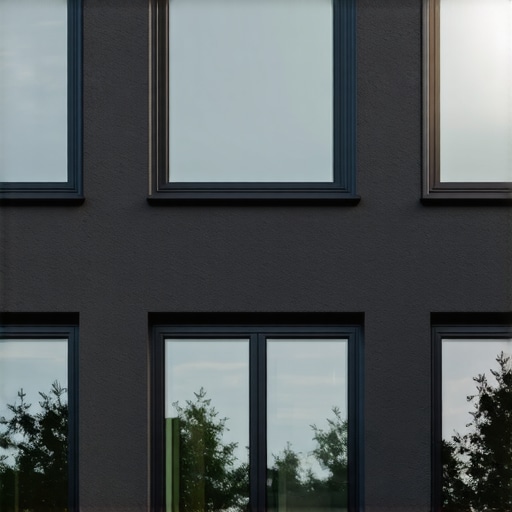
The Myth of the Maintenance-Free Exterior
For twenty-five years, I have heard the same sales pitch: ‘Install these and you will never think about your windows again.’ It is a lie. A window is a complex mechanical system that must withstand wind loads, thermal expansion, and the unrelenting assault of UV radiation. When we talk about a whole house window replacement for 2026, we are moving away from the flimsy vinyl frames of the late 90s and toward the structural integrity of aluminum. However, aluminum is a fickle beast. If you do not understand the physics of a thermal bridge, you are essentially installing a radiator that pumps heat into your house during July and sucks it out in January.
I remember a project in a coastal subdivision where I was called to inspect a commercial window replacement that had gone south. I pulled a heavy-duty aluminum frame out of the rough opening, and the header was completely black with rot. The installer had relied entirely on the nailing fin and a bead of cheap caulk, ignoring the shingle principle of water management. They did not use a sill pan. They did not use flashing tape. They treated a structural opening like a picture frame, and the house paid the price. That is why we need to talk about the three specific framing tactics that will define the sturdiness of homes in the coming years.
Tactic 1: The Evolution of the Polyamide Thermal Break
Aluminum is a phenomenal conductor of heat. In the old days, a single-pane aluminum window was a recipe for condensation and astronomical cooling bills. To make aluminum viable for energy efficient windows, we utilize a thermal break. This is not just a piece of plastic; in 2026, we are looking at reinforced polyamide struts. These struts separate the interior and exterior aluminum extrusions, breaking the thermal bridge. When we perform a double pane window install, the glass is only half the battle. If the frame conducts heat, the high-performance glass is wasted.
“Installation is just as critical as the window performance itself. A high-performance window installed poorly will fail.” – AAMA Installation Masters Guide
In hot climates, we focus on the Solar Heat Gain Coefficient (SHGC). We want a Low-E coating on Surface #2—the inner face of the outer pane. This reflects the long-wave infrared radiation back toward the street before it ever crosses the thermal break. If you are looking at a window transom installation or a large round top window services project, the structural rigidity of aluminum allows for thinner profiles (muntins) while maintaining the strength to hold massive IGUs (Insulated Glass Units). The polyamide break must be wide enough to ensure the U-Factor remains low, preventing the frame from reaching the dew point and sweating on your drywall.
Tactic 2: Mechanical Joinery and the Geometry of the Rough Opening
A sturdy home requires windows that do not rack or twist as the building settles. While vinyl windows are often welded at the corners, aluminum frames are typically joined mechanically with heavy-duty gaskets and screws. For a commercial window replacement or a high-end conservatory glazing project, the precision of the miter joint is everything. If that joint is not sealed with a high-quality small-joint sealant, water will find its way into the frame profile. Once water is inside the frame, it must have a path out via the weep hole system.
When I am at a job site, I watch the shimming process like a hawk. You cannot just shove a window into a rough opening and call it a day. You need to shim at the load-bearing points, ensuring the sill is perfectly level and the jambs are plumb and square. This is especially vital for automated window openers. If the frame is even an eighth of an inch out of square, the motor on those automated openers will burn out prematurely because of the increased friction on the sash. We use window safety glass (tempered or laminated) in these large-scale aluminum frames to meet code, but the glass also adds significant weight. That weight must be transferred through the shims directly to the floor joists, not hanging off the fasteners.
Tactic 3: Integrated Sill Pans and High-Performance Flashing
The most important part of any installation is the one you never see: the sill pan. This is a pre-formed or site-fabricated flashing that sits at the bottom of the rough opening. If water bypasses the primary seal of the window—and eventually, it will—the sill pan catches that moisture and directs it back to the exterior. In 2026, we are seeing a shift toward liquid-applied flashing membranes that create a seamless (in the sense of a continuous moisture barrier) bond between the window frame and the house wrap.
“Standard practice for installation requires that the water-resistive barrier be integrated with the window flashing to ensure a continuous drainage plane.” – ASTM E2112
When installing a window bird feeder attachment or other exterior accessories, homeowners often pierce the window casing. If the flashing system is not robust, these small punctures become entry points for moisture. A truly sturdy installation treats the window as part of the building’s skin. We utilize high-performance flashing tape that is pressure-sensitized. You have to roll it into place to activate the bond. If you just slap it on with your hand, it will delaminate within five years, and you will be back to the rot repair scenario I mentioned earlier.
Decoding the Performance Labels
I tell my clients to ignore the marketing brochures and look at the NFRC label. The U-Factor tells you how well the window keeps heat in (critical for those rare cold snaps), while the SHGC tells you how well it blocks the sun. For an aluminum-framed whole house window replacement, you should be looking for a U-Factor of 0.30 or lower, which is difficult to achieve without a serious thermal break. Visible Transmittance (VT) is also key; you want the light, but you do not want the heat. Modern spectrally selective Low-E coatings allow us to hit that sweet spot.
We also have to consider the air infiltration rating. Many installers ignore this, but a drafty window is a failing window. The glazing bead must be tight, and the weatherstripping must be multi-layered. On an operable sash, we look for bulb seals and fin seals that compress when the window is locked. If you can feel a breeze, the R-value of your wall is effectively zero at that point. We want the house to be an airtight vessel, where the HVAC system controls the environment, not the gaps around your window shims.
The Reality of Aluminum in 2026
Aluminum is no longer the budget choice; it is the architectural choice. Its strength allows for the massive glass spans required for modern aesthetics, including floor-to-ceiling conservatory glazing and oversized transoms. But that strength comes with the responsibility of managing its thermal properties. You cannot use ‘builder grade’ aluminum and expect a 2026 home to be comfortable. You need thermally broken, high-performance systems installed by people who understand that the gap between the window and the wall is the most vulnerable part of the house.