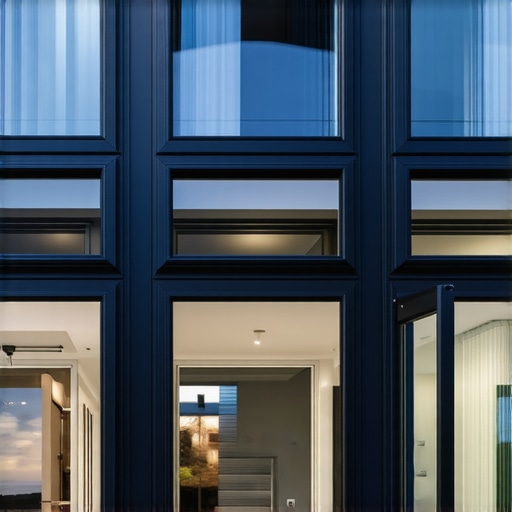
The High-Stakes Reality of Folding Glass Walls
When you decide to open up a twenty foot span of your home to the outdoors, you are not just buying a window; you are re-engineering the structural integrity and thermal envelope of your living space. As a master glazier with a quarter-century in the trenches, I have seen the evolution of folding systems from clunky, drafty accordions to the precision-engineered marvels we expect for 2026. However, the industry is still plagued by installers who treat a massive bi-fold unit like a standard double-hung. I recently pulled a folding system out of a custom build where the header was completely black with rot. The previous installer relied on the nailing fin and a prayer instead of a proper flashing tape and sill pan system. They failed to realize that on a south-facing wall, that massive opening acts as a thermal vacuum, sucking in moisture and heat if the flashing isn’t integrated with the house wrap in a perfect shingle-lap fashion. This is why window sill replacement and structural remediation are often the first steps in fixing a failed patio transition.
“Installation is just as critical as the window performance itself. A high-performance window installed poorly will fail.” – AAMA Installation Masters Guide
1. Structural Load and Header Deflection Management
The most common failure in folding window systems is not the glass, but the hole it sits in. A folding system is typically top-hung, meaning the entire weight of the double pane window install hangs from the header. If your contractor didn’t specify a LVL (Laminated Veneer Lumber) or steel lintel with zero-deflection tolerances, those panels will bind within six months. When I perform a multi-point lock installation on these units, I often find the deadbolts don’t align because the house has settled or the header has sagged just an eighth of an inch. The fix for 2026 is a structural audit before the first rough opening is even framed. We shim the tracks with surgical precision to ensure the operable sashes glide without friction. If the panels are sticking, it is usually a sign that the shim placement has failed to account for the weight distribution of window safety glass, which is significantly heavier than standard glazing due to the lamination process.
2. The Thermal Bridge and Low-E Logic
In a southern climate, your patio is a solar furnace. If you are installing large spans of glass, you must understand the physics of Solar Heat Gain Coefficient (SHGC). For 2026 patios, we prioritize Low-E coatings on Surface #2. This reflects the long-wave infrared radiation back to the outside before it even enters the double pane window install. If you feel a ‘glow’ of heat standing three feet from your closed window, your glazing has failed its thermal mission. I often see ‘Tin Man’ salesmen pushing triple-pane units with Krypton gas in climates where it makes zero sense. The real fix is a thermally broken aluminum frame. Aluminum is a great conductor of heat, which is bad. A thermal break—a polyamide strip between the interior and exterior frame—interrupts that heat flow. Without it, your window caulking services are just a cosmetic bandage on a thermal wound.
3. Advanced Privacy and True Divided Lite Aesthetics
The trend for 2026 is the ‘industrial’ look, often achieved through true divided lite services. Unlike simulated divided lites that are just stuck-on grids, true divided lites use individual panes of glass separated by a muntin. This adds significant weight and complexity to the folding mechanism. To balance this with modern needs, we are increasingly integrating switchable privacy glass. This technology uses a PDLC (Polymer Dispersed Liquid Crystal) film that goes from opaque to clear with an electrical charge. This eliminates the need for bulky curtains that ruin the aesthetic of a clean patio line. When I install these, we use smart window sensors that can trigger the opacity based on the sun’s angle or the time of day, ensuring your patio remains private without sacrificing the view.
4. Water Management and the Sill Pan Principle
Water is a patient enemy. In a folding system, the track is often recessed into the floor for a ‘flush’ look. This is a recipe for disaster if you don’t have a robust sill pan and weep hole strategy. Every drop of water that hits that glass must be channeled down the sash and into a pressurized drainage system. I have seen countless floors ruined because the installer skipped the flashing tape at the corners of the sill. In 2026, we utilize sub-sill drainage that connects directly to the home’s exterior drainage plane. Window caulking services are the secondary line of defense, not the primary. If you are relying on a bead of silicone to keep your subfloor dry, you have already lost the battle. We also ensure that any window sill replacement involves a slight outward pitch to prevent back-pooling.
“Standard practice for installation requires that the flashing system be integrated with the water-resistive barrier in a manner that prevents water penetration into the wall cavity.” – ASTM E2112
5. Automation and the Future of Operability
The final fix for a truly modern patio is the integration of automated window openers and motorized window treatments. A twenty-foot folding wall is heavy. Even with the best hardware, a child or elderly person may struggle to operate it. We now install concealed motors within the head track that can be controlled via a smartphone or voice command. These systems are paired with smart window sensors that detect wind speed and rain. If a sudden summer storm hits, the sensors trigger the multi-point lock installation to engage automatically, sealing the home against the elements. This isn’t just about luxury; it is about protecting the investment. An open folding door in a high-wind event can act like a sail, putting thousands of pounds of pressure on the hinges and the glazing bead.
The Glazier’s Verdict
A folding window system is a mechanical device, not just a building component. It requires maintenance, precise calibration, and an understanding of building science that goes beyond the aesthetic. Don’t buy into the sales pitch without looking at the NFRC labels for U-Factor and SHGC. More importantly, don’t hire a generalist for the install. You want a specialist who knows why a muntin affects the structural integrity of a sash and who won’t leave you with a rot problem five years down the road. High-performance glass is only as good as the professional who stands behind the level and the shim.