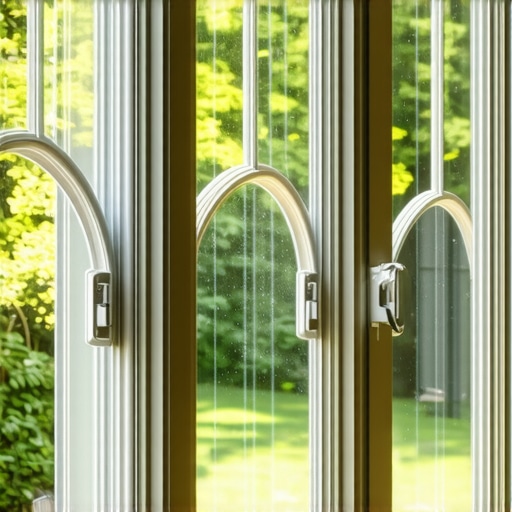
The Precision of the Curve: Beyond the Square Window Mentality
In twenty-five years of glazing, I have seen every possible failure in the building envelope, but nothing reveals a hack installer faster than a radius-top unit. Most contractors treat an arched window like a standard rectangular sash with a decorative hat, but that mindset is exactly why I spend half my year on remedial window header repair and structural interventions. When you are dealing with a curved geometry, you are fighting gravity and water in a way that square corners simply do not experience. An arched window is a complex architectural feature that requires a deep understanding of the Rough Opening tolerances and the physics of moisture migration.
A homeowner called me last November in a panic because their expensive custom radius windows were ‘sweating’ so profusely that water was pooling on the interior casings. I walked in with my hygrometer and a thermal imaging camera. I had to explain that the condensation wasn’t a product of the glass alone; it was a systemic failure of the thermal break and a total misunderstanding of the dew point in a high-humidity interior environment. The installer had used a cheap, non-thermally broken spacer and failed to account for the lack of airflow in the upper reaches of the arch. It was not the window’s fault; it was a failure of the installation logic. This is why window seal repair and proper specification are non-negotiable for 2026 standards.
“Installation is just as critical as the window performance itself. A high-performance window installed poorly will fail.” AAMA Installation Masters Guide
Fix 1: Structural Integrity and the Window Header Repair
An arched opening creates a unique stress point in the wall. Unlike a standard header that transfers loads vertically to the king studs and jacks, the curved nature of an arch can lead to settling if the framing is not perfectly executed. If I see even a sixteenth of an inch of sag, that window will never operate correctly. Window header repair is the first step in a flawless finish. In many older homes, the original headers were not designed for the weight of modern triple-pane insulated glass units (IGUs). We must ensure the Rough Opening is structurally sound, often reinforcing the arch with laminated veneer lumber or custom-curved steel plates to prevent future binding of the operable sashes. Without a dead-level sill and a perfectly plumb header, your multi-point lock installation will fail to engage, leaving the window vulnerable to air infiltration.
Fix 2: The Flashing System and Sill Pan Geometry
Water management is where most installers fail. You cannot flash a curve with standard rigid flashing. You must use a high-performance, flexible flashing tape that can be massaged into the radius without creating fish-mouths or voids. The ‘Shingle Principle’ dictates that every layer must shed water to the exterior. I always insist on a custom sill pan. This is a secondary line of defense that sits under the window and captures any water that gets past the primary seals, directing it back out through weep holes. If you are doing a window sill replacement at the same time, this is the moment to ensure the slope is at least 15 degrees to the exterior. I have seen too many oriel window repair jobs where the sill was flat, leading to catastrophic rot in the subfloor.
“The window installation shall be designed to provide a continuous water-resistive barrier across the rough opening and the window frame.” ASTM E2112 Standard Practice
Fix 3: Thermal Management and the U-Factor Math
In cold climates like the Midwest or the North East, the enemy is heat loss. When installing arched units, we have to look at the U-Factor, which measures the rate of heat transfer. A lower number is better. For a 2026-ready installation, we are looking for a U-Factor of 0.22 or lower. This is achieved through triple-pane glazing with a Low-E coating on Surface #3. This reflects the long-wave infrared radiation back into the house. I also look at the Glazing Bead and the spacer material. A warm-edge spacer is mandatory to prevent the edge of the glass from dropping below the dew point, which is the primary cause of condensation. This is technical glazing, not just filling a hole with foam. If you ignore the thermal bridge at the frame, you might as well leave the window open.
Fix 4: Advanced Hardware and Multi-Point Lock Installation
Arched windows, particularly those that are operable, are notorious for air leaks at the top of the radius. A standard latch is insufficient. We utilize a multi-point lock installation that pulls the sash tight against the weatherstripping at several locations along the frame. This ensures a consistent seal against wind pressure. This is especially important for basement egress window services where the window might be closer to the ground and subject to different pressure differentials. For larger arched units, I often specify hardware that allows for micro-adjustments in the field. A shim here or an adjustment of the strike plate there can mean the difference between a window that whistles in the wind and one that provides a vault-like seal.
Fix 5: Specialist Glass and Aesthetic Continuity
Not all arched windows are clear glass. We often provide stained glass window services for religious institutions or historic residential properties. The challenge here is the weight and the thermal performance. We often sandwich the decorative glass inside an IGU to protect it and provide modern insulation values. Furthermore, in certain commercial or high-density residential applications, we provide fire rated window services. These units use ceramic glass and specialized steel frames that can withstand intense heat for 45 to 90 minutes. This is a far cry from your standard vinyl replacement. Every component, from the muntins to the glazing bead, must meet rigorous safety standards. When I offer lifetime window guarantees, it is because I know every layer of that assembly is designed for the long haul.
The Final Seal: Why the Installer is the Most Important Component
You can buy the most expensive window in the world, but if the installer doesn’t understand the chemistry of the sealant or the physics of the wall cavity, you are wasting your money. We don’t just caulk and walk. We verify the Rough Opening, we manage the moisture, and we ensure the thermal envelope is unbroken. Whether you are looking for oriel window repair or a full-scale basement egress window services project, the technical details are what define the outcome. Stop looking for the lowest bid and start looking for the highest technical proficiency. A window is a precision instrument; treat it like one.