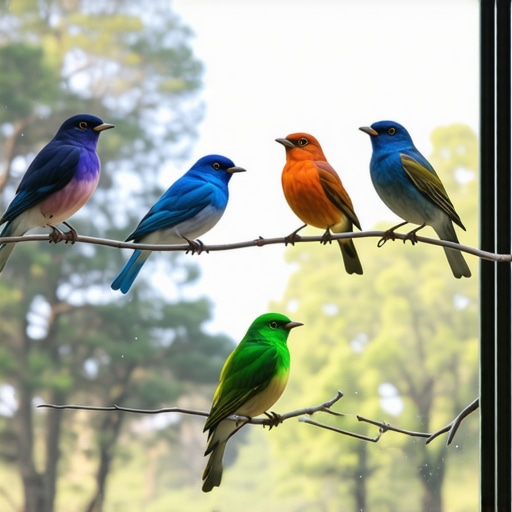
The Invisible Killer: Why Your High-Performance Glass is a Hazard
In twenty-five years of glazing, I’ve seen every conceivable failure of a building’s envelope. I’ve seen sill pans that were installed backward, causing ten thousand dollars in rot, and I’ve seen curtain wall services where the thermal breaks were bypassed by lazy installers. But there is one failure that isn’t about water or air—it’s about light. We spend our lives trying to make glass as clear and as reflective as possible, but for the local avian population, that clarity is a death sentence. A window isn’t just a component of your home’s thermal boundary; it’s a physical obstacle that, to a bird, looks like a clear flight path or a reflection of the sky.
I remember walking onto a job site in a wooded suburb where the homeowner had just spent a fortune on energy efficient windows with a double-silver Low-E coating. They called me out because they were finding stunned or dead waxwings on their porch every morning. I pulled out my light meter and showed them the reality: their glass had a Visible Transmittance (VT) that made the reflection of the surrounding oak trees indistinguishable from the trees themselves. It wasn’t a defect in the glass—it was a triumph of modern physics that the birds simply couldn’t comprehend. We had to mitigate that reflection without ruining the U-factor they had paid so much to achieve.
The Physics of Avian Collision: Surface #1 vs. Surface #2
When we talk about glazing, we number the surfaces of the glass from the outside in. Surface #1 is the exterior face. Most modern energy efficient windows have their Low-E coatings on Surface #2 to protect the thin metallic layers from oxidation and physical wear. This creates a highly reflective surface behind the first pane of glass. To a bird, this reflection is a ‘phantom forest.’ To prevent collisions, we have to break up that reflection on Surface #1. This is where window collision prevention becomes a technical necessity rather than an aesthetic choice.
“Installation is just as critical as the window performance itself. A high-performance window installed poorly will fail, and a window that does not account for the surrounding environment is a failure of design.” – AAMA Installation Masters Guide
The industry standard for bird safety is the ‘2×4 rule.’ Research shows that most birds will not attempt to fly through spaces smaller than two inches high or four inches wide. When choosing decals or patterns, you are essentially creating a visual barrier that signals ‘solid object’ to the bird’s brain. This is particularly important for large glass expanses like those found in modern curtain wall services or even a garden window install where the glass juts out into the bird’s natural flight path.
1. UV-Reflective Micro-Patterns
One of the most sophisticated ways to handle window collision prevention is the use of UV-reflective decals. Unlike humans, many bird species can see into the ultraviolet spectrum. These decals appear nearly transparent to us, maintaining the aesthetic of your historic window restoration or new installation, but they glow like a neon sign to a bird. When applying these, you must ensure the glass is surgically clean. I tell my apprentices that if there is a single fingerprint on that glazing bead, the adhesive will fail within two seasons. These patterns should be applied to Surface #1 to be most effective, as reflections on the outer pane can sometimes obscure decals placed on the interior.
2. High-Contrast Fritted Dot Arrays
For those who don’t mind a subtle visual texture, ceramic fritted glass or high-contrast vinyl dots are the gold standard. In the world of curtain wall services, we often see these integrated into the glass manufacturing process. For a residential retrofit, high-quality decals mimic this effect. The key is density. A single decal in the middle of a large picture window won’t do much. You need a grid. This is especially true if you have a window jamb extension that creates a deep shadow box effect, making the glass appear even more like an open cavity to a bird.
3. Linear Bird Tape and Horizontal Buffers
If you are looking at window financing options for a full replacement, you might consider glass that has acid-etched patterns. However, for existing sash units, linear bird tape is a cost-effective and highly durable solution. When we install these, we use a specialized shim to ensure the lines are perfectly level. It’s not just about safety; it’s about maintaining the architectural lines of the home. In a historic window restoration, we often use very thin, translucent tapes that follow the line of the muntins, blending into the original geometry of the window while providing the necessary visual break for wildlife.
“The primary goal of fenestration is to provide a controlled environment. This control must extend to the exterior impact of the glazing on the local ecosystem.” – NFRC Performance Guidelines
4. Geometric Aesthetic Decals (The Artistic Approach)
Not all bird-safe measures have to look like industrial safety equipment. For many homeowners, a garden window install is a focal point of the kitchen. Using geometric decals—like leaf patterns or abstract shapes—can provide protection while adding a design element. The technical challenge here is the ‘gap.’ You cannot leave more than two inches of clear glass vertically. If you’re doing a bi-fold window services project, where the glass folds and stacks, the decals must be placed so they don’t interfere with the tight tolerances of the folding mechanism or the weatherstripping.
5. Perforated Window Films (One-Way Vision)
Perforated films are a heavy-duty solution often used in commercial settings but increasingly popular in residential areas with high strike rates. These films have thousands of tiny holes. From the inside, you can see out quite clearly, though with a slight tint. From the outside, the window looks like a solid white or patterned surface. This completely eliminates the reflection problem. It also has a secondary benefit: it dramatically lowers your Solar Heat Gain Coefficient (SHGC), which is a godsend for energy efficient windows in the summer months. It’s like putting a heat shield over your rough opening.
Technical Considerations for 2026 Standards
As we move toward 2026, building codes are becoming stricter regarding wildlife protection. If you are performing a window lock installation or general maintenance, take a moment to inspect the exterior of your glass. Is there self-cleaning window glass involved? If so, you need to be extremely careful with adhesives. Self-cleaning coatings rely on a photocatalytic reaction that can be hampered by certain chemicals found in cheap decals. Always consult a glazier who understands the chemistry of your specific glass coating before sticking anything to Surface #1.
Furthermore, when considering window financing options, check if there are local grants for wildlife-friendly upgrades. Many municipalities are now incentivizing the use of bird-safe glazing. Whether you are dealing with a complex curtain wall or a simple operable sash, the goal is the same: water management, thermal efficiency, and ecological responsibility. A window is a hole in your wall, yes, but it doesn’t have to be a trap. By understanding the VT and the SHGC of your glass, and by properly applying the 2×4 rule with high-quality decals, you can protect the local wildlife while enjoying the benefits of modern glazing technology.