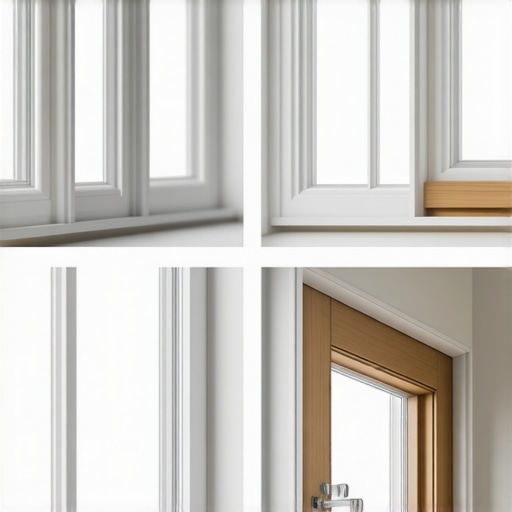
The Invisible Failure: Why Your Trim Doesn’t Fit
I’ve spent a quarter-century looking at the gaps where windows meet walls, and I can tell you that the window itself is rarely the problem. The real culprit is the transition. I remember pulling a rotted casement out of a dormer in a coastal home where the homeowner complained of a constant chill. When I stripped back the casing, the wood jamb extension literally crumbled in my hands. The previous installer hadn’t accounted for the wall’s depth after a siding retrofit, leaving a massive thermal bridge that invited condensation to live behind the drywall for five years. That’s the reality of a ‘caulk-and-walk’ job. If you want a perfect trim fit in 2026, you have to stop treating the jamb extension as an afterthought and start treating it as a structural component of your window glazing services.
“Installation is just as critical as the window performance itself. A high-performance window installed poorly will fail.” — AAMA Installation Masters Guide
Fix 1: The Pre-Assembled Box Method for Structural Integrity
One of the most common mistakes in window installation and repair services is trying to nail individual extension pieces to the window frame after it’s already in the rough opening. This leads to uneven reveals and shims that don’t provide consistent support. Instead, you should build a four-sided ‘jamb box’ on your bench. Use 3/4-inch select pine or moisture-resistant composite, especially for conservatory glazing or dormer window services where humidity levels fluctuate. By using pocket-hole screws and waterproof wood glue to join the corners, you create a rigid unit. This ensures that when you slide the extension into the window’s accessory groove, it stays square. You aren’t fighting the natural twist of the wood or the irregularities of the framing. This method also allows you to precisely dial in the reveal—that 1/8-inch step-back where the extension meets the window frame—which is essential for a professional finish that won’t crack when the house settles.
Fix 2: Thermal Decoupling and the Closed-Cell Barrier
In colder climates, the jamb extension is a primary site for heat loss. If you have high-performance glass with a low U-factor, the glass will stay warm, but a poorly insulated jamb will drop below the dew point. This is where anti-fog window coatings and energy-efficient window services meet. To fix this, you must leave a 1/4-inch gap between the extension and the rough opening studs. Do not pack this with fiberglass batts; fiberglass is a filter, not a seal. Instead, use a low-expansion, closed-cell polyurethane foam. This foam acts as both an adhesive and a thermal break, preventing the cold air in the wall cavity from reaching the back of your trim. When we perform acoustic window upgrades, this step is doubly important. Sound travels through air gaps. A fully sealed jamb box significantly reduces the Decibel transfer compared to a hollow, shimmed-only installation.
“The interface between the window frame and the rough opening shall be sealed to provide a continuous air barrier.” — ASTM E2112 Standard Practice for Installation
Fix 3: Managing Solar Gain and Moisture in Deep Openings
For south-facing windows or dome skylight replacement, the sun is your greatest enemy. Solar Heat Gain (SHGC) doesn’t just affect your AC bill; it causes extreme expansion and contraction in wood jambs. If you’re installing solar control window film or advanced glazing, you need to ensure the jamb extension can handle the heat. For deep-set windows, I recommend using a ‘back-band’ trim technique. This allows the jamb extension to remain slightly ‘proud’ of the drywall, hidden by a secondary molding. This creates a sacrificial movement joint. Furthermore, for dormer windows or any area prone to driving rain, always install a sill pan before the window and extension go in. If water bypasses the primary seal, it needs a clear path to the weep holes, not a path into your extension wood. This is the difference between a window that lasts 10 years and one that lasts 50. Whether you are adding roman shade services or bird safe window decals, the foundation remains the same: a square, sealed, and thermally isolated jamb.
The Final Seal: Why Precision Matters
Precision in the rough opening is the hallmark of a master glazier. When the sash moves smoothly and the glazing bead is perfectly aligned, it’s because the frame hasn’t been torqued by an ill-fitting jamb. Don’t let a salesman tell you that triple-pane glass is a magic bullet. If the air is whistling around your extension, that expensive gas fill is doing nothing for you. You need a system where every component—from the flashing tape to the final mitered cut of the casing—works in unison to manage the physics of the wall. In 2026, the standards for airtightness are only getting stricter. Mastering these three fixes ensures your installations aren’t just pretty, but high-performing machines that protect the building envelope.