The Anatomy of a Failing Fenestration: A 25-Year Perspective
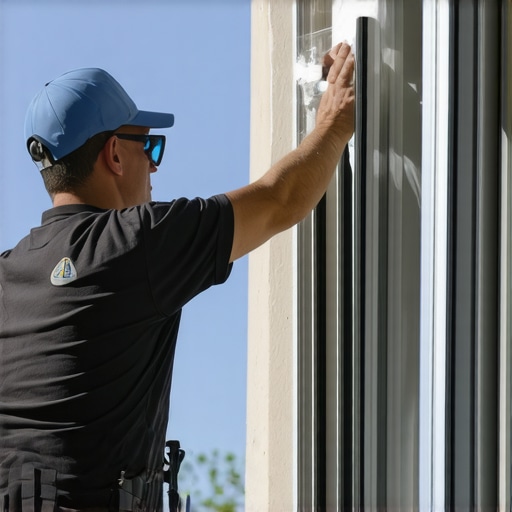
In the world of professional glazing, we have a saying: ‘A window is only as good as the hole it fills.’ Over my two and a half decades in this trade, I’ve seen homeowners drop $40,000 on high-end units only to have them perform like a screen door because they ignored the critical interface between the window frame and the rough opening. I recall a specific job in a freezing northern climate where I was called to inspect a three-year-old installation. The homeowner complained of ice forming on the interior trim. When I pulled the casing back, I found the previous ‘installer’ had used no backer rod and a cheap latex caulk that had desiccated and pulled away from the framing. The header was black with localized rot because the flashing tape hadn’t been lapped correctly. It wasn’t a window failure; it was a physics failure. That lack of attention to the building envelope is exactly what 2026-grade window caulking services are designed to fix, potentially saving you upwards of $300 annually on energy bills.
“Installation is just as critical as the window performance itself. A high-performance window installed poorly will fail.” — AAMA Installation Masters Guide
The Physics of Air Infiltration and the $300 Delta
When we talk about saving $300, we aren’t just blowing smoke. The math comes down to Air Changes per Hour (ACH). In older homes or homes with ‘standard’ builder-grade caulking, the gap between the window frame and the rough opening acts as a massive thermal bridge. Even a hairline fracture in a sealant bead allows for convective heat transfer. In the winter, warm air—which you’ve paid to heat—is pushed out through the top of the window (the stack effect), while cold air is sucked in through the bottom. By utilizing 2026-standard high-movement polyurethanes or modified silane polyethers, we create a flexible, airtight gasket that moves with the house’s seasonal expansion. This stops the convective loop dead. When you factor in the reduction in HVAC run-time for a 2,000-square-foot home, that $25-a-month reduction in utility costs is a conservative estimate.
The Science of Material Selection: Fiberglass and Vacuum Insulated Glass
Part of a modern energy strategy involves more than just a bead of goo. Fiberglass window services are becoming the gold standard for 2026 because fiberglass has a thermal expansion coefficient almost identical to the glass itself. This means the glazing bead and the frame move together, reducing the stress on the primary seal. If you are looking for the absolute peak of performance, vacuum insulated glass (VIG) is the next frontier. Unlike standard double-pane units filled with argon, VIG removes the air entirely between the panes, creating a vacuum. This eliminates conductive and convective heat transfer within the glass unit itself, reaching R-values that were previously only possible with thick, heavy triple-pane setups.
Water Management: Window Flashing Installation Done Right
Energy savings are irrelevant if your wall is rotting from the inside out. Proper window flashing installation follows the ‘shingle principle’—every layer must overlap the one below it to shed water. We always install a sill pan at the base of the rough opening. This sloped pan ensures that if water ever bypasses the primary sealant, it is directed back to the exterior through weep holes rather than soaking into the subfloor. For complex geometries, such as in arched window installation, we use flexible butyl flashing tapes that can be manipulated without puckering, which is where most ‘caulk-and-walk’ contractors fail.
“The flashing system shall be integrated with the water-resistive barrier in a manner that prevents water from entering the wall cavity.” — ASTM E2112 Standard Practice
Addressing Specialized Fenestration Needs
Beyond the standard double-hung, 2026 services must address specific architectural challenges. Window clerestory services, for instance, deal with units that are high-altitude and subject to intense solar radiation and wind pressure. These require high-modulus sealants that won’t degrade under intense UV exposure. For ground-level concerns, basement egress window services must focus on hydrostatic pressure. If the sill is below grade, the caulking must be rated for water immersion to prevent groundwater seepage during heavy storms. Furthermore, for those living near busy thoroughfares, noise reduction windows utilize laminated window safety glass with a PVB interlayer. This interlayer doesn’t just stop a baseball; it damps sound vibrations, providing a decibel reduction that standard glass cannot match.
Managing Light and Load
While sealing the window is paramount, managing what comes through the glass is the second half of the energy equation. Window shade services are often integrated into 2026 installations to manage Solar Heat Gain (SHGC). In a heating-dominant climate, you want a high SHGC to let the sun warm the room in winter, but in the summer, those same windows can turn a room into a greenhouse. Vacuum insulated glass helps, but exterior shading is the most effective way to reduce cooling loads. Even something as simple as a window bird feeder attachment needs to be considered by a pro; drilling into the sash or muntin of a modern window can void the warranty and create a new path for air infiltration if not properly sealed with a gasket.
Structural Integrity and Longevity
The 2026 approach to window maintenance is about longevity. We don’t just slap a bead of caulk over the old stuff. We perform a ‘tear-out’ of failed sealants, clean the glazing bead, and ensure the shim placement hasn’t shifted, which could cause the operable parts of the window to bind. Whether it’s a simple rough opening seal or a complex arched window installation, the goal is a holistic building envelope. By focusing on the technical minutiae—the dew point of the wall cavity, the elongation percentage of the sealant, and the thermal break of the frame—we ensure that your $300 in savings isn’t just for this year, but for the next twenty. Don’t buy the marketing hype of the salesman; look at the NFRC label and ensure your installer knows the difference between a drip cap and a sill pan.