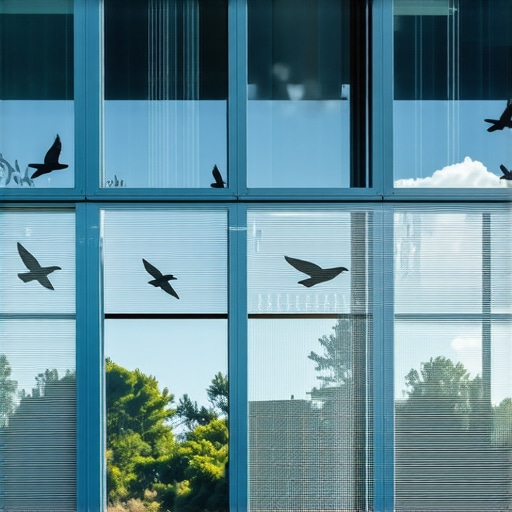
The Invisible Killer: Why Your High-Performance Glass is a Hazard
I once walked into a coastal residence where the homeowner was in a genuine state of distress. They had just completed a massive renovation, installing expensive, high-clarity impact window replacement units across the entire rear elevation. They called me because their ‘invisible’ windows were essentially killing machines; they were finding three or four migratory birds on the deck every morning. The homeowner thought the glass had a defect. I had to pull out my hygrometer and a high-intensity lamp to show them the reality. It wasn’t a defect; it was a consequence of high Visible Transmittance (VT). When you have a window with a VT of 0.70 or higher and a low Solar Heat Gain Coefficient (SHGC), you create a mirror that reflects the sky and trees with terrifying accuracy. The birds don’t see a barrier; they see a flight path. This is the dark side of modern glazing that no one talks about at the showroom.
“The fenestration product is one component of the building envelope, and its integration into the surrounding wall system is critical for both thermal performance and occupant safety.” – ASTM E2112 Standard Practice for Installation of Exterior Windows
The Glass Class: Understanding the Physics of Avian Collisions
To stop bird strikes in 2026, we have to look at the glass through the lens of physics. Most modern windows use a Low-E coating on Surface #2 to manage radiant heat. While this is great for a window energy audit result, it often increases the reflectivity of the exterior pane. In coastal environments where we deal with high wind loads and impact window replacement requirements, we are usually dealing with laminated glass—two layers of glass bonded with an interlayer. This creates even more surfaces for potential reflection. When we talk about window performance testing, we are usually measuring air infiltration or water penetration, but we also need to consider ‘threat factors’ for avian life. The goal is to break the reflection on Surface #1—the very outside of the glass—so the bird perceives the window as a solid object before it ever reaches the rough opening.
Tactic 1: Ceramic Fritting and UV-Patterned Glazing
The most effective method for 2026 involves ceramic fritting. This isn’t just a decal you stick on the sash. We are talking about ceramic ink fired into Surface #1 of the glass during the tempering process. This creates a permanent pattern—dots, lines, or grids—that birds can see. For residential applications, specifically for window clerestory services where glass is high and hard to reach, we are moving toward UV-reflective coatings. These are visible to birds (who see in the UV spectrum) but nearly invisible to the human eye. When you are performing a lift slide window replacement, specifying a UV-patterned IGU (Insulating Glass Unit) ensures you maintain that high-end aesthetic without the carnage. We ensure the glazing bead is seated perfectly to prevent any moisture from reaching these specialized coatings, which can degrade if the seal fails.
Tactic 2: Integrated Smart Window Sensors and Automated Deterrents
As we move into 2026, the ‘smart home’ is finally addressing the bird strike issue. We are now installing smart window sensors that do more than just monitor for break-ins. These sensors can detect the ultrasonic frequencies of approaching birds or use low-power radar to trigger automated systems. When a bird is detected on a collision course, the system can momentarily activate an electrochromic tint or lower motorized external screens. This is particularly useful in smoke vent window systems found in modern commercial-residential hybrids, where large operable panes are often left in positions that are invisible to birds. Integrating these sensors into the building’s automation system ensures that protection is only active when needed, preserving your view the rest of the time.
“Installation is just as critical as the window performance itself. A high-performance window installed poorly will fail to meet both its energy and safety ratings.” – AAMA Installation Masters Guide
Tactic 3: Strategic Exterior Maintenance and Shading
One of the simplest ways to reduce strikes is often overlooked: the state of the glass surface itself. While interior window washing is a standard chore, the exterior surface reflection is what kills. We often recommend window covering repair for exterior solar screens rather than interior blinds. An interior blind does nothing to stop the reflection on the outside of the glass. By using exterior-grade insect screens or solar mesh, you physically break the reflection. During a threshold seal services call, I often check the sill pan and flashing tape to ensure that if the homeowner adds exterior screens, the added weight or mounting hardware hasn’t compromised the water management system. Every screw hole in a window frame is a potential leak point if not managed by a professional who understands the ‘shingle principle’ of water shedding.
Tactic 4: The Role of Performance Audits and Retrofitting
If you aren’t ready for a full lift slide window replacement, you can still mitigate the risk. A comprehensive window energy audit can identify which panes are the most reflective and thus the highest risk. We use these audits to determine where to apply high-tech retroactive films that contain UV patterns. Furthermore, we look at the weep hole functionality and shim stability. If a window has shifted in its rough opening, it might create weird angles of reflection that are more attractive to birds. Proper window performance testing after a retrofit ensures that any film or external screen hasn’t negatively impacted the U-factor or caused thermal stress on the glass, which can lead to spontaneous breakage in high-performance triple-pane units.
The Glazier’s Verdict on Bird-Safe Standards
In 25 years, I’ve seen window trends come and go, but the move toward bird-safe glazing is the first time we’ve had to design for a non-human occupant. It requires a mastery of glass chemistry and installation precision. You can’t just slap a sticker on a sash and call it a day. You need to understand how the muntin layout might assist in breaking reflections or how a lift slide window replacement requires specialized hardware to handle the weight of fritted glass. Don’t let a ‘caulk-and-walk’ installer tell you that bird strikes are unavoidable. With the right glass selection and a technical approach to the building envelope, we can have our view and keep the local ecosystem intact. Precision in the rough opening and a deep understanding of the NFRC label are your only real defenses against both the elements and the tragic loss of wildlife at your doorstep.