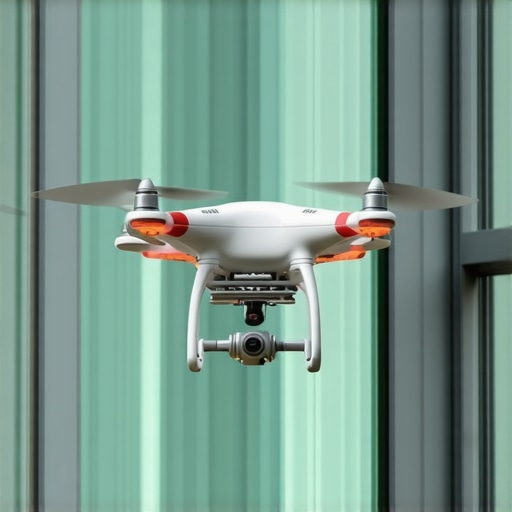
The Evolution of the Fenestration Assessment
I have spent the better part of three decades hanging off the sides of buildings or balanced precariously on 40-foot extension ladders just to verify if a glazing bead was properly seated or if a weep hole was obstructed. I remember one specific case in a high-rise coastal development where we spent four days and ten thousand dollars in scaffolding costs just to investigate a persistent leak on the 14th floor. When we finally got eyes on the unit, the issue was a 2-millimeter gap in the structural silicone where the installer had skipped a three-inch section of the perimeter seal. If I had access to a high-definition drone with thermal imaging back then, we would have diagnosed the failure in twenty minutes without ever leaving the ground. This is the reality of 2026: we are no longer guessing at building envelope integrity; we are mapping it with surgical precision.
“Field testing and inspection of installed fenestration products is a vital step in ensuring the long-term performance of the building envelope, particularly in high-wind zones where water penetration resistance is paramount.” – AAMA 502-12 Voluntary Specification
In the current market, especially for those seeking impact window replacement or specialized laminated glass services, the cost of a mistake is higher than ever. When we talk about window performance testing in 2026, we are looking at a fusion of aeronautics and thermal physics. Here are the three primary reasons why drone-based inspections are the smartest investment you can make for your property’s glazing system.
1. Rapid Identification of Thermal Bridging and Seal Failures
The primary enemy of any window system, whether it is a residential double-hung or a 90-minute fire window in a commercial corridor, is the loss of thermal equilibrium. In coastal environments, we deal with extreme vapor pressure. If the Argon gas fill in your Insulated Glass Unit (IGU) has leaked out—a process known as seal failure—the window’s U-factor skyrockets. Traditional inspections often miss this until the sash is clouded with internal condensation, at which point the damage is done. A drone equipped with a FLIR thermal camera can scan a facade and identify every single unit that is underperforming. It looks for the heat signature of the spacer bar; if the edge of the glass is significantly warmer (in summer) or colder (in winter) than the center-of-glass temperature beyond the expected gradient, we know the seal is compromised. This allows for targeted window hardware upgrades and glass replacement before the rough opening is compromised by moisture-driven rot.
2. Precision Mapping for Structural Integrity and Hardware Fatigue
We often ignore the mechanical components of a window until they seize. I have seen countless instances where window hinge services were neglected for years, leading to a catastrophic failure of the operable vent during a wind event. Drones in 2026 are equipped with high-resolution LiDAR (Light Detection and Ranging), capable of measuring the rough opening tolerances to within a fraction of a millimeter. This is critical for window header repair. If the header is sagging due to structural settlement, it puts vertical pressure on the window frame, causing the muntins to warp and the glazing bead to pop. By using a drone to map the facade, we can detect these minute shifts in the building’s geometry that the human eye simply cannot see from the ground. This proactive data allows us to recommend window burglar bars or hardware reinforcements before the frame becomes so distorted that it requires a full-frame tear-out.
“The installation of flashing and the management of the water plane at the window-to-wall interface must be verified through rigorous field observation to prevent premature failure of the building assembly.” – ASTM E2112 Standard Practice
3. Drastic Reduction in Labor and Insurance Liabilities
When you look for a specialist near me for stained glass window services or historic restoration, the largest line item on the quote isn’t usually the glass—it’s the access. Setting up mast-climbers, swing stages, or high-reach cranes is an expensive and dangerous logistical nightmare. Drone inspections eliminate 90% of this overhead. By conducting the initial window performance testing via UAV, we can pinpoint the exact locations of failure. Instead of a crew of four technicians spending a week inspecting every window on a 50-unit condo, one pilot and one Master Glazier can complete the data acquisition in four hours. This data is then used to create a surgical repair plan. We only send the technicians to the specific units that need impact window replacement or window hinge services, drastically reducing the time the property is under construction and the liability associated with high-altitude work.
The Technical Reality of the 2026 Window Market
Whether you are managing a property with 90-minute fire windows or a private residence requiring laminated glass services, the technology of the inspection must match the technology of the glass. Modern Low-E coatings are designed to reflect long-wave infrared radiation, but they are incredibly sensitive to improper handling. If an installer scratched the coating during the shim and level process, it will create a thermal anomaly that a drone can detect instantly. We are moving away from the era of ‘wait and see if it leaks’ toward an era of ‘see the leak before it happens.’ The sill pan is your last line of defense against water infiltration, and even there, drones can use moisture-sensitive sensors to detect dampness in the sub-wall before it manifests as black mold on your interior drywall. If you are not using drone technology for your annual window audit, you are essentially flying blind in a storm of rising energy costs and increasing climate volatility.