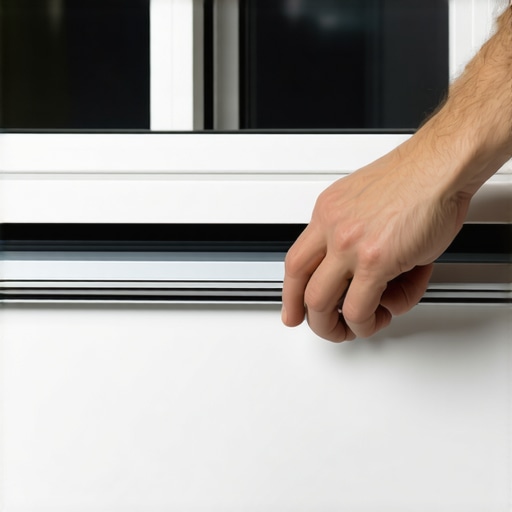
The Reality of Window Friction
In twenty-five years of glazing, I have seen more good windows ruined by a lack of maintenance than by actual mechanical failure. Homeowners often mistake a stubborn sash for a structural issue, when in reality, it is a failure of the basic physics of the track system. A window is an operable machine, and like any machine, it requires calibration. When a window fails to slide, it is usually because the interface between the sash and the jamb has become a collection point for environmental debris, compromised weatherstripping, and oxidized metal or vinyl. I have walked into jobs where the homeowner was ready to rip out a perfectly good casement window installation just because the track was fouled with five years of grit. It is a waste of high-performance materials and a misunderstanding of how these systems are engineered to function.
The Condensation Crisis: A Field Observation
A homeowner in Chicago called me in a panic last February because their relatively new double-hung windows were ‘sweating’ and the tracks were becoming clogged with a black, sludge-like substance. They were convinced the seal had failed on the insulated glass units (IGUs). I walked in with my hygrometer and found the interior humidity was hovering at 62%. It wasn’t a window failure; it was a lifestyle issue combined with neglected maintenance. The ‘sludge’ in the track was actually a mixture of dust and condensation that had nowhere to go because the weep holes were plugged with debris. I had to explain that even the best self-cleaning window glass cannot overcome a blocked drainage system. If that water stays in the track, it will eventually freeze, expand, and crack the frame, leading to a much more expensive basement egress window service or a full frame replacement. This scenario underscores a fundamental rule: the track is not just for sliding; it is a water management system.
“Installation is just as critical as the window performance itself. A high-performance window installed poorly will fail.” – AAMA Installation Masters Guide
The Physics of the North: Why Your Tracks Stick
In cold climates, we prioritize the U-Factor, which measures the rate of heat loss. When your window track is dirty, the sash does not sit perfectly in the pocket. This creates a microscopic gap in the weatherstripping installation, allowing cold air to infiltrate and warm, moist air to escape. This is where the dew point becomes your enemy. As that warm air hits the cold track, it condenses. If you are using smart glass or electrochromic smart windows, you might have better control over radiant heat, but the mechanical seal remains the primary defense against convection. A dirty track equals a failed seal. This is why we focus on the U-Factor—it is the king of the north. We want to keep that heat inside, and that requires a sash that slides into a clean, unobstructed seat.
Fix 1: Clearing the Drainage Path and Weep Hole Calibration
The first fix for a smoother slide is not lubrication, but debridement. Most people reach for a spray can immediately, which is a mistake. If you spray oil into a dirty track, you are simply creating a grinding paste that will erode the glazing bead and the rollers. You must start with a high-suction vacuum and a stiff-bristled nylon brush. You are looking for the weep holes—those small rectangular openings on the exterior of the frame. These are designed to allow water to exit the track through the sill pan. If these are blocked, water backs up, the sash swells (if it’s wood) or becomes bogged down by surface tension. In my years of skylight leak repair, I’ve seen that the same principles apply: if water can’t get out, it will get in. Ensure the rough opening is clear and the drainage path is wide open before you even think about the slide.
Fix 2: Weatherstripping Restoration and Friction Reduction
Weatherstripping is the unsung hero of the operable window. Over time, pile weatherstripping becomes matted with dust, and EPDM rubber gaskets can become brittle. This increases the coefficient of friction significantly. If your window feels like it is rubbing against sandpaper, it is because the weatherstripping has become an abrasive. After cleaning, I recommend a dry silicone spray—never a petroleum-based product which can degrade vinyl and attract more dirt. Apply the lubricant to a cloth and wipe the weatherstripping directly. This maintains the integrity of the seal without leaving a sticky residue. For those with child proof window locks, ensure the locking mechanism is not misaligned; a lock that is slightly ‘out of true’ will put lateral pressure on the sash, making it feel stuck when it is actually just pinched.
Fix 3: Sash Realignment and Roller Maintenance
If the window still resists, you are likely looking at a shim or alignment issue. As houses settle, the rough opening can shift, putting pressure on the frame. For sliding windows, the rollers at the bottom of the sash are often adjustable. There is usually a small hole in the bottom rail where a screwdriver can be inserted to raise or lower the sash. You want the sash to be perfectly square within the frame. If it is canted even two millimeters, it will bind. This is the same precision required for bullet resistant window glass installations; the weight of the glass is so significant that even a minor misalignment will lead to mechanical failure. If you are dealing with a casement window installation, check the hinges for oxidation and apply a heavy-duty marine-grade grease to the pivot points.
“Performance ratings such as U-factor and SHGC are only valid when the product is maintained according to manufacturer specifications.” – NFRC Certification Standards
The Future of Fenestration: Smart Glass and Self-Cleaning Surfaces
As we look toward 2026, the technology within the glass itself is evolving. We are seeing more electrochromic smart windows that can tint on demand, reducing the need for heavy window shade services that can sometimes interfere with window operation. However, the more complex the glass, the more vital the track maintenance becomes. High-tech glass is heavy. Whether it is self-cleaning window glass that uses a photocatalytic coating to break down organic dirt or triple-pane units designed for extreme insulation, the stress on the track is increased. You cannot afford to have a fouled track when you are moving a 100-pound sash. Regular maintenance is the only way to protect the investment of these advanced glazing systems.
Conclusion: Maintenance Over Replacement
Before you call for a total replacement or search for specialized window shade services to hide your drafty, stuck windows, look at the tracks. Most of the time, the solution is a matter of basic glazier’s maintenance. Clean the weep holes, lubricate the weatherstripping with dry silicone, and square up the sash. Water management and friction control are the two pillars of a long-lasting window system. Treat your windows like the high-performance machines they are, and they will keep the dew point where it belongs—outside your home.