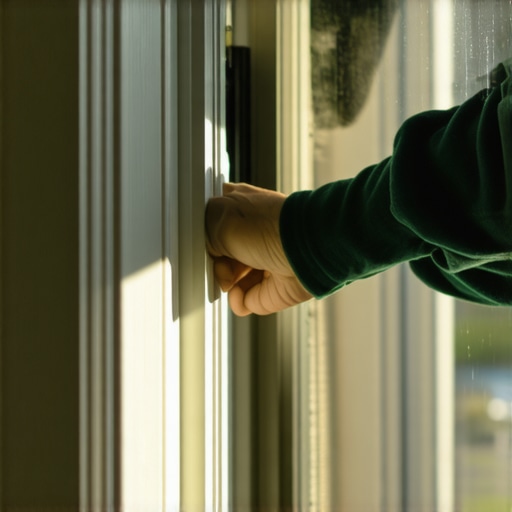
The Mechanics of a Sticking Sash: Why Your Window is Fighting You
In my twenty-five years as a glazier, I have seen every possible failure of the window assembly. I have climbed scaffolds in the dead of a Chicago winter to diagnose why a curtain wall is whistling, and I have crawled into damp basements where an egress window has become a structural trap. Most homeowners think a sticking sash is just a sign of an old house or a humid day. They are wrong. A sash that refuses to move smoothly is a warning sign of hardware fatigue, frame racking, or a complete failure of the window balance system. When you fight with a window, you aren’t just battling friction; you are battling the physics of the Rough Opening and the tension of a calibrated spring system.
The Narrative: A Basement Egress Emergency
I recall a specific call from a homeowner in a high-humidity suburb. They were in a panic because their newly installed basement egress window services had left them with a window that required two grown men to lift. I walked in with my hygrometer and a digital level. The humidity was hovering at 68% in that finished basement. I showed them that the window wasn’t just ‘tight.’ The installer had failed to account for the thermal expansion of the vinyl frame. They had pinned the Sash so tight with improper Shim placement that the balance springs were stretched beyond their elastic limit. It wasn’t just a sticking window; it was an installation autopsy waiting to happen. We had to perform a window seal repair and reset the entire unit to restore its Operable status. This is why understanding your window’s anatomy is the difference between a functional home and a liability.
“Installation is just as critical as the window performance itself. A high-performance window installed poorly will fail to meet energy and operational standards.” – AAMA Installation Masters Guide
The Five Red Flags of a Failed Window Balance
A window balance is a hidden mechanism—usually a spring, a lead weight, or a block-and-tackle system—that offsets the weight of the sash. When it fails, the window becomes a guillotine or a heavy burden. Here are the five signs you need to look for.
1. The Gravity Drop (The Dead Weight)
If you lift your window and it immediately slides back down, the balance has snapped. In modern double-hung windows, we use constant force balances or spiral balances. A constant force balance uses a stainless steel coil. If that coil loses its tension, it can no longer support the weight of the window safety glass. This is particularly dangerous with tempered glass installation because the weight is specific to the density of the glass. If the balance isn’t rated for that weight, gravity wins every time.
2. The Uneven Climb (The Crooked Sash)
When you pull up on the lift rail and the left side rises faster than the right, you have a balance synchronization failure. This often happens because the Glazing Bead or the weatherstripping is catching on one side, putting unequal stress on the springs. If you ignore this, you will eventually rack the frame, leading to a permanent loss of the thermal seal.
3. The Screech of the Spiral
If your window sounds like a rusty gate, the internal lubricant of the spiral balance has dried out or been contaminated by drywall dust. This friction doesn’t just make noise; it wears down the Sash tracks. Once those tracks are scored, even a new balance won’t make the movement smooth again.
4. The Bulging Weatherstripping
Sometimes the sash sticks because of poor weatherstripping installation. If the pile or the bulb seal has come loose, it jams the channel. I often see this in DIY repairs where the homeowner used a seal that was too thick for the tolerance of the window’s Rough Opening. This creates ‘drag’ that the balance wasn’t designed to overcome.
5. The Stuck Sash in Cold Weather
In northern climates, moisture is the enemy. If your window sticks only in January, you likely have a condensation issue where ice is forming in the Weep Hole or the tracks. This is often a sign that your U-factor is too high and heat loss is occurring, causing internal frost. A high-performance window with a proper window seal repair should prevent this by keeping the interior glass surface above the dew point.
“A window’s energy efficiency is only as good as its airtightness, which is heavily dependent on the integrity of its operational hardware and the precision of the installation.” – NFRC Technical Manual
Advanced Glazing: From Garden Windows to Smart Tech
We are moving beyond simple glass and springs. When I perform a garden window install, I have to account for the weight of the glass projecting outward. These units often require specialized support because the Sash weight is distributed differently than a standard vertical window. Furthermore, the industry is shifting toward electrochromic smart windows and app controlled shading. These systems use low-voltage currents to tint the glass or move internal blinds. If your sash is sticking in one of these high-tech units, you aren’t just risking a sore back; you are risking a short circuit in an expensive piece of glazing technology. You need a glazier who understands both the 19th-century physics of a counterweight and the 21st-century electronics of electrochromic smart windows.
The Solution: Maintenance and Precision
Don’t just spray WD-40 in the tracks. That is a ‘caulk-and-walk’ mentality that attracts dirt and ruins the Glazing Bead. You need to clean the tracks with a dry silicone spray and inspect the Flashing Tape and Sill Pan for signs of water intrusion that might be swelling the frame. If you are adding accessories like a cat window perch installation, ensure you aren’t putting lateral pressure on the sash that could pull it out of its balance shoes. We offer a guaranteed fix for these issues by recalibrating the tension and ensuring the window is square, level, and plumb within the Rough Opening. [image-placeholder]
I found this post really enlightening, especially the part about the importance of proper installation and how even a slight misalignment can cause such issues with window operation. I recently had a similar problem with a double-hung window in my own house where it was only in the winter months that it would stick. Turns out, an overlooked condensation buildup was freezing in the tracks, but the root cause was high U-factor insulation leading to internal frost. It’s fascinating how complex window mechanics can be, from balance springs to electronics in smart windows. Has anyone here tackled a DIY repair that involved recalibrating these balances or inspecting for water intrusion? I’d love to hear about practical solutions or pitfalls others have faced because I’ll admit, I’m a bit hesitant to jump into detailed repairs myself after reading about the nuances involved.