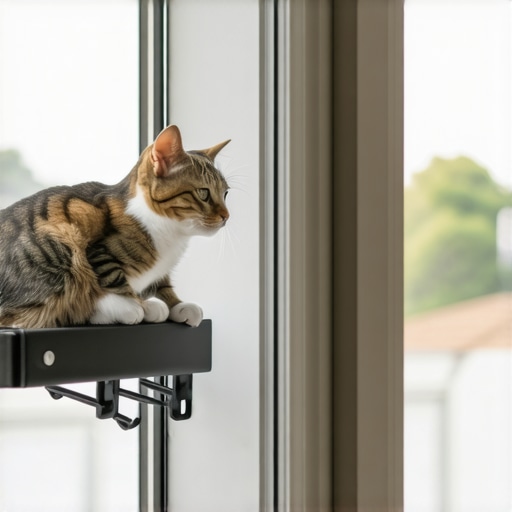
The Structural Reality of Feline Fenestration
Most homeowners view a window as a static piece of glass, but as a glazier with 25 years in the field, I see a complex thermal envelope under constant pressure. When you decide to bolt a 20-pound cat and a plush perch onto that system, you are changing the load-bearing dynamics of the sash and the glazing bead. In 2026, as we push toward higher Energy Star window certification standards, the margin for error in DIY cat window perch installation has narrowed significantly. Before you suction-cup anything to your glass, we need to talk about the physics of the rough opening and the hidden decay that could lead to a catastrophic failure.
The Rot Autopsy: Why Your Sill Might Not Hold
I remember a call-out in a drafty Victorian where the homeowner wanted a custom window fabrication for a modern catio. I pulled back the interior trim and found that the previous ‘handyman’ had installed a vinyl insert without a sill pan or any flashing tape. The header was black with fungal growth. The wood was so soft I could push a screwdriver through the muntin. This is the danger of wood rot window repair neglect; if your substrate is compromised, a cat perch becomes a lever that will eventually pull the entire sash out of alignment. If you are mounting a perch, your first safety fix is a deep-dive inspection into the structural integrity of the frame. We aren’t just looking for aesthetic wear; we are looking for the structural failure of the cellulose fibers due to chronic moisture infiltration.
“Installation is just as critical as the window performance itself. A high-performance window installed poorly will fail, often starting with the failure of the perimeter seal.” – AAMA Installation Masters Guide
Fix 1: The Transition to Tempered Glass Installation
If your windows are older than 20 years, they likely contain annealed glass. In the world of high-performance glazing, annealed glass is a liability when pets are involved. For any area where a cat is jumping, climbing, or resting, tempered glass installation is the gold standard. Tempering is a process of extreme heating and rapid cooling that creates balanced internal stresses. This gives the glass four to five times the strength of standard panes. More importantly, if it does fail, it breaks into small, relatively harmless granules rather than lethal shards. When we perform custom window fabrication for pet-friendly homes, we look at the ‘Bite’—the amount of glass that extends into the frame. A deep bite ensures that even under the lateral pressure of a leaping cat, the glass remains seated within the glazing bead.
Fix 2: Managing the Thermal Bridge and Window Sweep Replacement
In cold climates, a cat perch creates a micro-climate against the glass. This often leads to localized condensation. When the cat’s body heat meets the cold surface of a window with a high U-factor, the dew point is reached instantly. This moisture drips down into the sash, leading to mold. A critical safety and comfort fix is a window sweep replacement. The sweep is the weatherstripping at the bottom of the operable sash that prevents air infiltration. If your sweep is cracked or compressed, you are allowing cold air to undermine the perch’s stability by causing the frame materials to contract at different rates. By ensuring a tight seal, you maintain the thermal integrity of the Energy Star window certification and protect the wood from moisture-induced rot.
Fix 3: Window Restrictors and Feline Security
One of the most overlooked safety fixes is the window restrictors install. In 2026, we are seeing a rise in ‘limit stops’ that allow for ventilation without providing enough space for a cat to squeeze through or for the window to be forced open from the outside. These are not mere latches; they are engineered components that bolt into the rough opening or the frame channel. This is particularly vital if your perch is located on a second-story window. You need to ensure that the operable sash cannot be moved beyond a four-inch gap, complying with child safety standards which, incidentally, are perfect for feline safety as well.
Fix 4: Switchable Privacy Glass for Sensory Management
Modern feline psychology suggests that constant visual stimulation from the street can lead to ‘feline hyperesthesia.’ This is where switchable privacy glass comes in. Using PDLC (Polymer Dispersed Liquid Crystal) technology, you can turn your cat’s view from transparent to opaque with a flick of a switch or a smartphone app. From a glazing perspective, this adds a layer of laminated protection to the window. The interlayer used in switchable glass acts as a safety barrier, much like a car windshield, ensuring that even if the glass is impacted, it stays in one piece. This is the pinnacle of custom window fabrication for the modern pet owner.
“The flashing system must be integrated with the water-resistive barrier in a weather-board fashion to direct water to the exterior.” – ASTM E2112 Standard Practice
Fix 5: Leveraging Window Rebate Assistance for Upgrades
Many homeowners hesitate to upgrade to tempered or high-performance glass because of the cost. However, in 2026, various window rebate assistance programs are available for those upgrading to Energy Star window certification tiers. If you are repairing wood rot window repair issues or replacing old single-pane units to accommodate a cat perch, you can often offset the cost by choosing units with Low-E coatings on Surface #3. In northern climates, this coating reflects long-wave infrared radiation back into the room, keeping your cat warm and your energy bills low. When searching for ‘glaziers near me,’ ensure they understand how to document these installs for your local utility rebates.
Technical Summary: The Physics of the Perch
When installing a perch, you must account for the shim placement within the frame. If you mount a heavy perch to a vinyl window that isn’t properly shimmed against the rough opening, the weight will cause the frame to bow. This bowing breaks the seal of the IGU (Insulated Glass Unit), leading to the escape of the Argon gas fill and the eventual fogging of the window. A master glazier ensures that the load is transferred through the frame into the house’s structural Jack studs, not just the decorative trim. Do not settle for a ‘caulk-and-walk’ solution. Your cat’s safety, and your home’s envelope, depend on technical precision. If you see weep holes being blocked by perch brackets, stop immediately. Those holes are designed to drain the glazing channel; blocking them is a guaranteed recipe for wood rot window repair in your near future.