The Science of the Air Barrier: Why Your Home is Leaking Cash
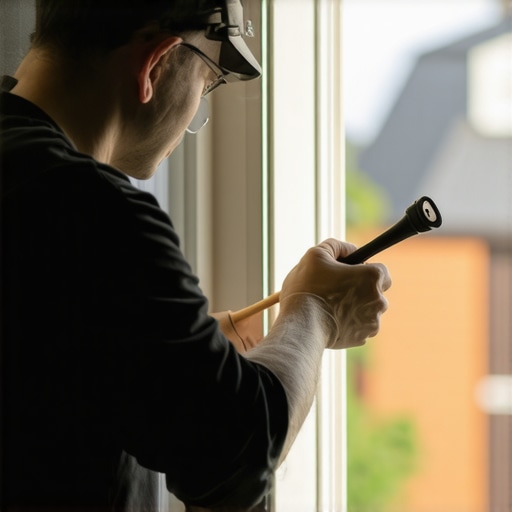
A few months back, I was called to a residence where the homeowner was certain their high-end window replacement services had been a waste of money. They were seeing moisture pooling on the wooden sills and felt a distinct chill whenever the wind kicked up from the north. I didn’t reach for a caulk gun; I reached for my digital hygrometer and a thermal leak detector. Within minutes, I proved the relative humidity was sitting at a staggering 62 percent while the exterior temperature was plummeting. The window wasn’t leaking water from the outside; it was a dew point disaster. The warm, moist interior air was hitting the cold glass surface, and because the window draft sealing at the meeting rail was substandard, a localized draft was accelerating the cooling of that sash. This is the reality of modern glazing: if you don’t manage the physics of the hole in your wall, the most expensive window in the world is just a transparent thermal bridge.
“Installation is just as critical as the window performance itself. A high-performance window installed poorly will fail.” AAMA Installation Masters Guide
Tactic 1: Implementing High-Performance Compression Seals at the Meeting Rail
In the world of professional window glazing services, we distinguish between ‘wipe’ seals and ‘compression’ seals. Most builder-grade windows rely on cheap felt or pile weatherstripping. These are essentially brushes that attempt to block air. By 2026, as energy codes tighten, these are no longer sufficient. To stop drafts fast, you must transition to closed-cell EPDM or silicone compression bulbs. When you lock an operable sash, the hardware should pull the sash into the frame, compressing the bulb. This creates an airtight gasket similar to a refrigerator door. If you can slide a piece of paper through your window sash while it is locked, your weatherstripping has failed. I often see ‘caulk-and-walk’ installers ignore the meeting rail, the horizontal point where two sashes of a double-hung window meet. This is the primary failure point for air infiltration. Installing a secondary, high-density foam wedge at the stiles can redirect airflow and force it into the weep hole system where it belongs, rather than into your living room.
Tactic 2: The Integrated Perimeter Seal and Rough Opening Management
A window is only as good as the rough opening it sits in. When we perform quality window replacement services, the focus isn’t just on the glass; it’s on the interface between the window frame and the wall. Standard practice often involves stuffing fiberglass insulation into the gaps. This is a mistake. Fiberglass is a filter, not an air barrier. To truly stop drafts, we utilize a two-stage sealing method. First, we use a low-expansion, closed-cell spray foam specifically formulated for windows and doors. This foam must not bow the jambs, which would interfere with the sash movement. Second, we apply a high-grade flashing tape or a liquid-applied flashing membrane that ties the window’s nailing fin directly to the house wrap. This creates a redundant drainage plane. If moisture or air bypasses the exterior trim, it hits this secondary barrier and is directed down to the sill pan and out. Without a proper sill pan, any water that enters the assembly will sit on the wooden framing, leading to the rot I have spent half my career repairing.
“The air leakage rating of a window is a better indicator of real-world comfort than the U-factor alone in windy environments.” NFRC Performance Standards
Tactic 3: Advanced Glazing Beads and Surface #3 Low-E Optimization
In northern climates, heat loss is the primary enemy. When providing window glazing services, we look at the glass package as a multi-layered shield. To stop the ‘feeling’ of a draft, which is often actually radiant heat loss rather than moving air, we must optimize the Low-E coating. For cold climates, we want the Low-E coating on Surface #3 (the indoor-facing surface of the outdoor pane or the outdoor-facing surface of the indoor pane). This reflects long-wave infrared radiation back into the house. However, if the glazing bead, the strip that holds the glass in the sash, is brittle or improperly seated, air can bypass the glass unit entirely. We utilize a silicone-based glazing compound to bed the glass, ensuring that the glass-to-sash interface is hermetically sealed. For those looking for the ultimate in 2026 tech, self-cleaning window glass with an integrated titanium dioxide coating can be paired with motorized window treatments. These automated systems can be programmed to close based on outdoor temperature sensors, adding an extra layer of thermal resistance during the coldest hours of the night.
The Myth of the Quick Fix: Why Quality Matters
Many homeowners are tempted by cheap window screen replacement or basic window draft sealing kits from big-box stores. While a temporary v-strip might stop a whistle for a season, it does nothing to address the structural thermal failures of an aging window. If your muntins are rattling or your sash is sagging in the rough opening, no amount of sticky-back foam will help. You need a professional assessment of the shim placement and the integrity of the hardware. When a window is properly shimmed, it stays square and level, allowing the weatherstripping to make uniform contact around the entire perimeter. If the window is out of square, one corner will always be gapping, creating a permanent draft. This is why a window warranty service is so vital; it ensures that the mechanical operation of the window, which is essential for a tight seal, is maintained over the life of the product. Whether you are maintaining a greenhouse window or upgrading to motorized window treatments, the physics remain the same: manage the pressure, seal the gaps, and respect the dew point.