The Science of Sun-Tunneling: Beyond the Standard Casement Window Installation
In twenty-five years of glazing, I have seen every possible attempt to fix a ‘dead zone’ in a house—those interior hallways, windowless bathrooms, and deep kitchens where the sun never reaches. People often think the solution is a massive casement window installation on the nearest exterior wall, but if that wall is shaded by a neighbor’s house or a massive oak, you are simply installing a high-priced view of a fence. As we look toward 2026, the technology behind tubular skylights has reached a tipping point, offering a level of spectral efficiency that traditional windows can’t touch in land-locked rooms.
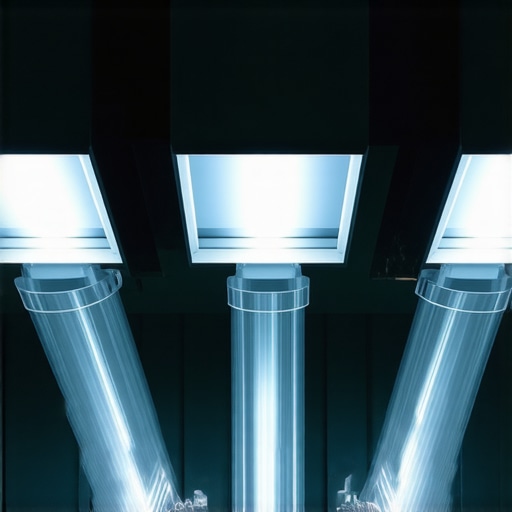
A homeowner called me in a panic because their new windows were ‘sweating’ and they thought the seals had failed. I walked in with my hygrometer and showed them the humidity was 60%. It wasn’t the windows; it was their lifestyle and the lack of proper ventilation in a dark, damp core of the house. That experience highlights the fundamental misunderstanding of fenestration: a window is a system, not just a piece of glass. When we talk about tubular skylights—often called sun tunnels—we are talking about managing the physics of light through a precision-engineered rough opening in your roof deck. Unlike a fixed skylight service that requires a massive light well to be framed and drywalled, a tubular system uses a much smaller footprint but delivers concentrated, high-quality lumens.
“Installation is just as critical as the window performance itself. A high-performance window installed poorly will fail.” — AAMA Installation Masters Guide
1. Superior Thermal Performance and SHGC Control
The primary enemy in any glazing project, especially in Southern climates, is the Solar Heat Gain Coefficient (SHGC). In places like Phoenix or Miami, a standard skylight can act like a magnifying glass, baking your interior. Tubular skylights for 2026 have solved this through advanced dome optics. The exterior dome is typically an injection-molded acrylic or polycarbonate that is engineered to ‘harvest’ low-angle sunlight in the morning and evening while rejecting the harsh, high-angle midday sun. This is the logic of the Low-E coating on Surface #2 in a vertical window, but applied to a horizontal roof surface.
Because the actual light-transmitting tube is sealed at both the dome and the diffuser level, you are creating a dead-air space that acts as a thermal break. This is far superior to a wood window repair on an old, leaky sash. The U-factor—the measurement of heat transfer—is significantly lower because the surface area exposed to the exterior is minimized. In 2026, we are seeing tubes with silver-ion reflective linings that offer 99% spectral reflectivity. This means you aren’t just getting light; you’re getting the full visible spectrum without the infrared heat gain that forces your HVAC system to redline. If you are already looking into hurricane window protection, you should know that these domes are now rated for high-velocity hurricane zones (HVHZ), utilizing the same sacrificial laminated layers found in impact-rated casements.
2. Adaptive Light Control with Cellular Shade Integration
One of the biggest complaints about older skylight models was the ‘always on’ nature of the sun. You couldn’t dim the sun in your media room or bedroom. The 2026 service standard now includes cellular shade integration directly within the tube or at the diffuser level. This isn’t your standard window shade service where you’re fiddling with a cord. These are often solar-powered, remote-controlled baffles or shades that sit inside the glazing bead of the diffuser. For a master bedroom that needs a pet door window insert for the balcony but also needs total darkness for sleep, an integrated tubular shade is a game-changer.
We also see Roman shade services attempting to mimic this at the ceiling level, but it never looks right. By integrating the light control into the tubular assembly, you maintain the clean lines of the ceiling. This is particularly important when you’re doing a window sill replacement or other interior trim work; you want the skylight to look like a high-end LED fixture, not a hole in the roof. The diffuser at the bottom is no longer just a piece of frosted plastic. We are now installing Fresnel lens diffusers that spread the light evenly across the room, eliminating the ‘spotlight’ effect and reducing glare on screens. This level of precision is why a window warranty service is so critical; you want to ensure the seals on those internal motorized components are covered for the long haul.
“The National Fenestration Rating Council provides a fair, accurate, and credible rating of window, door, and skylight energy performance.” — NFRC Standards Overview
3. Structural Integrity and Moisture Management
When I perform a wood window repair, I’m often dealing with the ‘Shingle Principle’ failures—water getting behind the flashing because an installer relied on caulk instead of gravity. Tubular skylights are inherently safer for your roof’s structural integrity because they fit between standard 16-inch or 24-inch on-center rafters. There is no need to cut a header or install heavy shims to support the weight of a massive glass slab. The ‘sill pan’ logic we use in window installation is applied here through a seamless, leak-proof flashing housing.
The 2026 units utilize a ‘weep hole’ system within the flashing to allow any condensation that forms on the inner dome to escape to the exterior of the roof deck rather than dripping into your insulation. This is where most installers fail. They ‘caulk and walk,’ sealing the very holes meant to let the system breathe. Whether you are looking at fixed skylight services or a full casement window installation, the goal is always the same: water management. By using a circular flashing profile, the tubular skylight naturally sheds water around its perimeter, much like a chimney cricket. This makes it a much more reliable long-term solution than trying to waterproof a complex, multi-sash window configuration in a roof-adjacent wall. When you combine this with the low maintenance requirements—no muntins to paint, no sashes to weight-balance—it becomes the most logical ROI for bringing light into the dark core of a modern home.