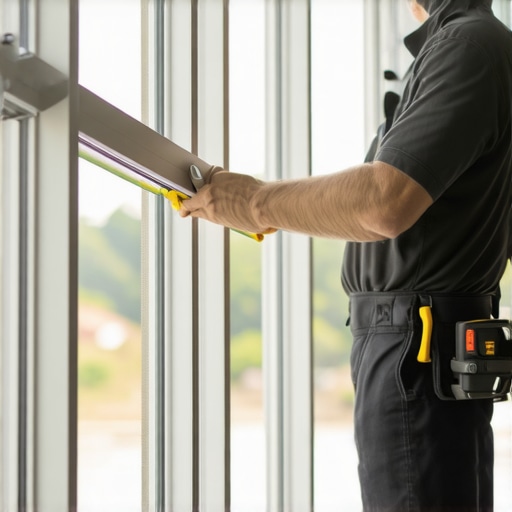
The Physics of the Void: Why Precision Measurement is Non-Negotiable in 2026
In twenty-five years of glazing, I have seen it all. I have seen fifteen-thousand-dollar folding window systems that wouldn’t close because the header sagged three-eighths of an inch. I have seen vinyl window replacement jobs where the installer ‘caulked and walked,’ leaving the homeowner with a rotting sill within two seasons. Most people think a window is just a piece of glass you stick in a hole. I see a window as a complex thermal barrier—a critical component of the building envelope that must manage hydrostatic pressure, UV degradation, and structural movement. Measurement is the most overlooked phase, and in 2026, with the rise of window automation integration and complex geometric window shapes, a simple tape measure mistake can cost you thousands in structural remediation.
The Narrative: A Case of the ‘Perfect’ Fit That Wasn’t
I pulled a vinyl window out of a house in a high-humidity suburb last summer, and the header was completely black with rot. The homeowner was baffled; they had paid for high-end, energy-efficient units with a lifetime window guarantee. Why the failure? The previous installer had measured the rough opening too tight. They relied on the nailing fin and a bead of cheap silicone instead of proper flashing tape and a dedicated sill pan. Because the window was jammed into the opening without room for a proper shim, the frame expanded during the summer, cracked the perimeter seal, and turned the wall into a sponge. That one-eighth-of-an-inch measurement error bypassed the entire moisture management system. This is the reality of the trade: precision isn’t a luxury; it is the only thing standing between a dry home and a structural lawsuit.
“Installation is just as critical as the window performance itself. A high-performance window installed poorly will fail.” – AAMA Installation Masters Guide
Mistake #1: The ‘Rough Opening’ vs. ‘Finished Opening’ Confusion
The first mistake that plagues retrofit window installation is failing to identify the true rough opening. A rough opening (RO) is the structural frame—the 2x4s or 2x6s—not the decorative trim or the drywall return. If you measure the distance between the wood trim, you are measuring the aesthetic finish, not the structural void. In 2026, as we move toward more geometric window shapes, the RO becomes even more complex. An octagon or a cathedral-top window requires a specific shim space of 1/4 inch to 1/2 inch on all sides. This space isn’t just for ease of installation; it allows the window frame to expand and contract without putting stress on the glazing bead. If you measure too large, you have no room for the shim; too small, and you are relying on excessive spray foam, which can bow the jambs and prevent the sash from operating. The coefficient of linear thermal expansion for vinyl is significant—vinyl moves much more than wood or aluminum. Without that shim gap, the window becomes its own worst enemy as the seasons change.
Mistake #2: Ignoring the Square, Level, and Plumb (SLP) Check
A window can be the right size but still be the wrong shape for the hole. Every opening in an older house is a parallelogram, not a rectangle. I always tell my apprentices: ‘Check the diagonals.’ If the diagonal measurements from the top-left to bottom-right and top-right to bottom-left differ by more than 1/8th of an inch, the opening is out of square. If you order a standard rectangular vinyl window replacement for an out-of-square opening, you will end up with a ‘racked’ frame. This is a nightmare for electronic window locks. These modern systems require the strike plate and the bolt to align with sub-millimeter precision. A racked frame means the lock won’t engage, the automation sensor will throw an error code, and your high-tech security system becomes a paperweight. When we talk about window automation integration, we are talking about motorized sashes that must glide without friction. Even a slight tilt in the plumb line increases the torque on the motor, leading to premature failure and a voided lifetime window guarantee.
Mistake #3: Failing to Account for the Thermal Environment and SHGC
In hotter climates, the mistake isn’t just the physical size; it’s the specification of the glass relative to the orientation. This is where ‘glazing zooming’ matters. You might measure the size perfectly, but if you don’t account for the Solar Heat Gain Coefficient (SHGC), that window is a thermal failure. In the South, the sun is your primary enemy. You want a low SHGC—typically below 0.25. This is achieved through a spectrally selective Low-E coating, usually applied to ‘Surface #2’ (the inward-facing side of the outer pane). This coating reflects long-wave infrared radiation (heat) while allowing visible light to pass through. If you are also doing a solar screen installation, you are adding another layer of thermal protection, but the glass itself must do the heavy lifting. I’ve seen homeowners install expensive energy-efficient windows that actually increased their cooling costs because they chose a high SHGC, thinking they wanted the ‘natural light’ to heat the house in winter—a mistake in a climate where winter lasts two weeks. We use Argon or Krypton gas fills between the panes to further reduce the U-factor, but if the measurement technician doesn’t note that the window faces West with zero shade, the lack of a proper Low-E coating will make that room an oven by 4 PM.
“Standard Practice for Installation of Exterior Windows, Doors and Skylights requires that the water-resistive barrier be integrated with the fenestration flashing to ensure a continuous drainage plane.” – ASTM E2112
Mistake #4: The Retrofit vs. Full-Frame Calculation Error
There are two ways to do this: the easy way and the right way. Retrofit window installation (or pocket replacement) involves leaving the old frame in place and sliding a new one in. It’s faster and cheaper, but it reduces the glass area and relies on the integrity of the old sill. If your measurement service doesn’t account for the ‘stop-to-stop’ width, the new window won’t seat properly. Conversely, a full-frame replacement requires removing everything down to the studs. The measurement for a full-frame job must be much more precise because you are responsible for the entire flashing system. In 2026, we are seeing more tempered glass installation requirements for windows located near floor level or in ‘hazardous’ locations (bathrooms, stairwells). If you measure for a retrofit but find rot that necessitates a full-frame tear-out, your glass size changes. If you’ve already ordered tempered glass—which cannot be cut or trimmed on-site—your project comes to a screeching halt. A master glazier knows that until you see the studs, you don’t truly know the measurement.
Mistake #5: Neglecting the Depth of the Jamb for Folding Window Systems
Folding window systems are the height of architectural luxury, but they are unforgiving. These systems often require a much deeper jamb than a standard double-hung window. If you measure the width and height but forget the jamb depth, your new folding system might protrude an inch past your interior drywall or interfere with your exterior siding. Furthermore, these systems require a structural header capable of carrying the ‘moment load’ when the glass is stacked at one end. A measurement service that doesn’t check the structural integrity of the header is doing half a job. In 2026, we also integrate window automation into these large systems. You need space in the rough opening for the actuators and the wiring. If your measurement is ‘tight-to-stud,’ where are those wires going to go? They get pinched, they short out, and your smart home becomes a headache. We also have to consider the ‘weep hole’ placement. Every high-quality window has them to allow water to escape the glazing track. A common measurement and installation mistake is burying these holes in the exterior trim or siding, which traps moisture and causes the very rot I described earlier.
Technical Deep Dive: The Science of the Seal and the Sash
Let’s talk about the ‘Glazing Bead.’ This is the strip of vinyl or wood that holds the glass in the sash. In high-performance energy-efficient windows, this bead must be perfectly seated. If a window is forced into an opening that is too small, the frame flexes, and the glazing bead can pop out, breaking the hermetic seal of the Insulated Glass Unit (IGU). Once that seal is broken, the Argon gas escapes, and you get condensation between the panes. You didn’t just buy a window; you bought a laboratory-sealed environment. When we measure for geometric window shapes, the angles must be checked with a digital protractor. A ‘roughly 45-degree’ cut on a mitered corner will leak air like a sieve. We use flashing tape to create a ‘shingle principle’ drainage plane, where every layer overlaps the one below it. This ensures that even if water gets past the first line of defense (the caulk), it is directed out via the sill pan. If your measurement professional isn’t talking about sill pans and drainage planes, they aren’t a glazier; they’re a salesman. Don’t be fooled by the ‘lifetime window guarantee’—most of those warranties only cover the product, not the labor to fix a rotted house caused by a bad measurement. In 2026, demand precision. Measure for the rough opening, account for the thermal expansion of your vinyl window replacement, and ensure your automation sensors have the clearance they need. Precision over price, every single time.